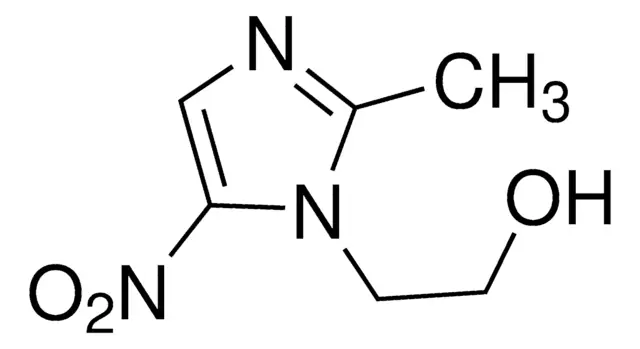
CAS Number443-48-1
SynonymsEumin; Bexon; Klont; 2-(2-Methyl-4-nitro-1H-imidazol-1-yl)ethanol; Elyzol; 2-(2-Methyl-5-nitro-1-imidazolyl)ethanol; Cont; Klion; EINECS 207-136-1; 2-Methyl-5-nitroimidazole-1-ethanol; Nalox; Metronidazole; MFCD00009750; 2-(2-Methyl-4-nitro-imidazol-1-yl)-ethanol; 2-(2-Methyl-5-nitro-1H-imidazol-1-yl)ethanol; Flagil; Nida; CLONT
Molecular FormulaC6H9N3O3
Molecular Weight171.15
Purity99.00%
Density1.5±0.1 g/cm3
Boiling Point405.4±25.0 °C at 760 mmHg
Melting Point159-161 °C (lit.)
AppearanceWhite to slightly yellow crystalline powder
EINECS207-136-1
Symbol
Signal WordWarning
| Chemical & Physical Properties | |
|---|---|
| CAS Number | 443-48-1 |
| Catalog No. | 2A-0202341 |
| Chinese Name | 甲硝唑 |
| Synonyms | Eumin; Bexon; Klont; 2-(2-Methyl-4-nitro-1H-imidazol-1-yl)ethanol; Elyzol; 2-(2-Methyl-5-nitro-1-imidazolyl)ethanol; Cont; Klion; EINECS 207-136-1; 2-Methyl-5-nitroimidazole-1-ethanol; Nalox; Metronidazole; MFCD00009750; 2-(2-Methyl-4-nitro-imidazol-1-yl)-ethanol; 2-(2-Methyl-5-nitro-1H-imidazol-1-yl)ethanol; Flagil; Nida; CLONT |
| Molecular Formula | C6H9N3O3 |
| Molecular Weight | 171.15 |
| Purity | 99.00 |
| Density | 1.5±0.1 g/cm3 |
| Boiling Point | 405.4±25.0 °C at 760 mmHg |
| Melting Point | 159-161 °C (lit.) |
| Appearance | White to slightly yellow crystalline powder |
| Water Solubility | acetic acid: 0.1 M, clear, faintly yellow | <0.1 g |
| Storage Condition | 2-8°C |
| Application | Metronidazole is a nitroimidazole antibiotic that is effective against anaerobic bacteria and protozoa. |
| EINECS | 207-136-1 |
| HTC | 2933990090 |
| PubChem ID | 24896667 |
| MDL Number | MFCD00009750 |
| SMILES | CC1=NC=C([N+]([O-])=O)N1CCO |
| InChI | 1S/C6H9N3O3/c1-5-7-4-6(9(11)12)8(5)2-3-10/h4,10H,2-3H2,1H3 |
| InChI Key | VAOCPAMSLUNLGC-UHFFFAOYSA-N |
| Beilstein/REAXYS | 611683 |
| NACRES Code | NA.76 |
| UNSPSC | 51282808 |
| Hazard Symbols | Transport |
| MSDS | msds/21861_1_443_48_1.pdf |
| Bioactivity | Metronidazole is a nitroimidazole antibiotic medication used particularly for anaerobic bacteria and protozoa.Target: Antibacterial; AntiparasiticMetronidazole is a nitroimidazole antibiotic medication used particularly for anaerobic bacteria and protozoa. Metronidazole is an antibiotic, amebicide, and antiprotozoal.[1] It is the drug of choice for first episodes of mild-to-moderate Clostridium difficile infection [2]. Metronidazole, taken up by diffusion, is selectively absorbed by anaerobic bacteria and sensitive protozoa. Once taken up by anaerobes, it is non-enzymatically reduced by reacting with reduced ferredoxin, which is generated by pyruvate oxido-reductase. Many of the reduced nitroso intermediates will form sulfinamides and thioether linkages with cysteine-bearing enzymes, thereby deactivating these critical enzymes. As many as 150 separate enzymes are affected.In addition or alternatively, the metronidazole metabolites are taken up into bacterial DNA, and form unstable molecules. This function only occurs when metronidazole is partially reduced, and because this reduction usually happens only in anaerobic cells, it has relatively little effect upon human cells or aerobic bacteria.[3] Related Catalog Signaling Pathways >> Anti-infection >> Bacterial Signaling Pathways >> Anti-infection >> Parasite Research Areas >> Infection References [1]. In Schaechter, M.; Engleberg, N. C.; DiRita, V. J. et al. Schaechter's Mechanisms of Microbial Disease. Hagerstown, MD: Lippincott Williams & Wilkins. p. 28. [2]. http://www.drugs.com/monograph/metronidazole.html [3]. Cohen, S.H., et al., Clinical practice guidelines for Clostridium difficile infection in adults: 2010 update by the society for healthcare epidemiology of America (SHEA) and the infectious diseases society of America (IDSA). Infect Control Hosp Epidemiol, Chemical & Physical Properties Density 1.5±0.1 g/cm3 Boiling Point 405.4±25.0 °C at 760 mmHg Melting Point 159-161 °C(lit.) Molecular Formula C6H9N3O3 Molecular Weight 171.154 Flash Point 199.0±23.2 °C Exact Mass 171.064392 PSA 83.87000 LogP -0.01 Vapour Pressure 0.0±1.0 mmHg at 25°C Index of Refraction 1.612 InChIKey VAOCPAMSLUNLGC-UHFFFAOYSA-N SMILES Cc1ncc([N+](=O)[O-])n1CCO Storage condition 2-8°C Stability Stable. Incompatible with strong oxidizing agents. Water Solubility acetic acid: 0.1 M, clear, faintly yellow | <0.1 g/100 mL at 20 ºC |
| Use of | Metronidazole is a nitroimidazole antibiotic medication used particularly for anaerobic bacteria and protozoa.Target: Antibacterial; AntiparasiticMetronidazole is a nitroimidazole antibiotic medication used particularly for anaerobic bacteria and protozoa. Metronidazole is an antibiotic, amebicide, and antiprotozoal.[1] It is the drug of choice for first episodes of mild-to-moderate Clostridium difficile infection [2]. Metronidazole, taken up by diffusion, is selectively absorbed by anaerobic bacteria and sensitive protozoa. Once taken up by anaerobes, it is non-enzymatically reduced by reacting with reduced ferredoxin, which is generated by pyruvate oxido-reductase. Many of the reduced nitroso intermediates will form sulfinamides and thioether linkages with cysteine-bearing enzymes, thereby deactivating these critical enzymes. As many as 150 separate enzymes are affected.In addition or alternatively, the metronidazole metabolites are taken up into bacterial DNA, and form unstable molecules. This function only occurs when metronidazole is partially reduced, and because this reduction usually happens only in anaerobic cells, it has relatively little effect upon human cells or aerobic bacteria.[3] Properties Articles199 Name metronidazole Synonym More Synonyms Metronidazole Biological Activity Description Metronidazole is a nitroimidazole antibiotic medication used particularly for anaerobic bacteria and protozoa.Target: Antibacterial; AntiparasiticMetronidazole is a nitroimidazole antibiotic medication used particularly for anaerobic bacteria and protozoa. Metronidazole is an antibiotic, amebicide, and antiprotozoal.[1] It is the drug of choice for first episodes of mild-to-moderate Clostridium difficile infection [2]. Metronidazole, taken up by diffusion, is selectively absorbed by anaerobic bacteria and sensitive protozoa. Once taken up by anaerobes, it is non-enzymatically reduced by reacting with reduced ferredoxin, which is generated by pyruvate oxido-reductase. Many of the reduced nitroso intermediates will form sulfinamides and thioether linkages with cysteine-bearing enzymes, thereby deactivating these critical enzymes. As many as 150 separate enzymes are affected.In addition or alternatively, the metronidazole metabolites are taken up into bacterial DNA, and form unstable molecules. This function only occurs when metronidazole is partially reduced, and because this reduction usually happens only in anaerobic cells, it has relatively little effect upon human cells or aerobic bacteria.[3] Related Catalog Signaling Pathways >> Anti-infection >> Bacterial Signaling Pathways >> Anti-infection >> Parasite Research Areas >> Infection References [1]. In Schaechter, M.; Engleberg, N. C.; DiRita, V. J. et al. Schaechter's Mechanisms of Microbial Disease. Hagerstown, MD: Lippincott Williams & Wilkins. p. 28. [2]. http://www.drugs.com/monograph/metronidazole.html [3]. Cohen, S.H., et al., Clinical practice guidelines for Clostridium difficile infection in adults: 2010 update by the society for healthcare epidemiology of America (SHEA) and the infectious diseases society of America (IDSA). Infect Control Hosp Epidemiol, Chemical & Physical Properties Molecular Formula C6H9N3O3 Exact Mass 171.064392 PSA 83.87000 LogP -0.01 Index of Refraction 1.612 InChIKey VAOCPAMSLUNLGC-UHFFFAOYSA-N Stability Stable. Incompatible with strong oxidizing agents. |
| Tax Rebate | 13.0% |
| Supervision | None. MFN tariff: 6.5%. Ordinary tariff: 20.0% |
| Transport Info | Shipping Name: UN |
| MSDS Transport Info | Module 14. Shipping information 14.1 UN dangerous goods number European Land Transport Dangerous Regulations: -International Maritime Dangerous Regulations: -International Air Transport Dangerous Regulations: - 14.2 United Nations shipping name European Land Transport Dangerous Regulations: Non-dangerous goods IMDG Code: Non-dangerous goods International air transport dangerous goods regulations: non-dangerous goods 14.3 Transport hazard categories European Land Transport Dangerous Regulations: -International Maritime Dangerous Regulations: -International Air Transport Dangerous Regulations: - 14.4 Package group European Land Transport Dangerous Regulations: -International Maritime Dangerous Regulations: -International Air Transport Dangerous Regulations: - 14.5 Environmental hazards European Land Transport Danger Regulations: No International Maritime Danger Regulations International Air Transport Danger Regulations: No Marine pollutants (yes/no): No 14.6 Special reminder to users No data available |
| Related Products in API & Advanced Intermediates | ||
|---|---|---|
| Chlorambucil | 305-03-3 | 2A-9021194 |
| 2-Hydroxyestrone | 362-06-1 | 2A-9021501 |
| Metoclopramide | 364-62-5 | 2A-9021516 |
| 2-Fluoroisoniazide | 369-24-4 | 2A-9021556 |
| Betamethasone | 378-44-9 | 2A-9021606 |
| Naloxone | 465-65-6 | 2A-9022073 |
| Epitestosterone | 481-30-1 | 2A-9022152 |
| Sodium sulfadiazine | 547-32-0 | 2A-9022805 |
| Amitriptyline hydrochloride | 549-18-8 | 2A-9022819 |
| 5-alpha-Dihydroprogesterone | 566-65-4 | 2A-9022955 |
| Browse all API & Advanced Intermediates products » | ||
Phone:
630-322-8886
630-322-8887
Email:
Office Locations:
Chicago, IL, USA
San Francisco, CA, USA


 EN
EN


 SDS
SDS