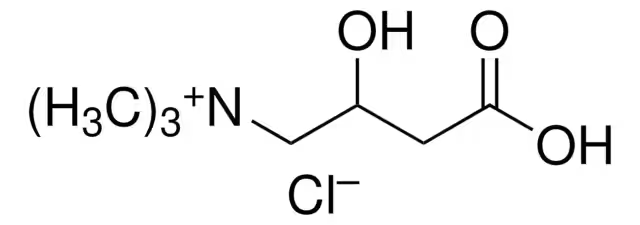
CAS Number461-05-2
SynonymsDL-Carnitine Hydrochloride; 3-Carboxy-2-hydroxy-N,N,N-trimethyl-1-propanaminium chloride; 3-Hydroxy-4-(trimethylammonio)butanoate hydrochloride; EINECS 207-309-1; UNII:F64264D63N; Vitamin BT Hydrochloride; Carnitine chloride; 3-Hydroxy-4-(trimethylammonio)butyrate Hydrochloride; carnitine hydrochloride; MFCD00011904; 3-Carboxy-2-hydroxy-N,N,N-trimethyl-1-propanaminium, inner salt, hydrochloride (1:1); 1-Propanaminium, 3-carboxy-2-hydroxy-N,N,N-trimethyl-, chloride (1:1); 3-Carboxy-2-hydroxy-N,N,N-trimethylpropan-1-aminium chloride; QV1YQ1K1&1&1 &&Anhydro HCl; (±)-Carnitine (chloride)
Molecular Formula(CH3)3N(Cl)CH2CH(OH)CH2COOH
Molecular Weight197.66
Purity≥98 (TLC)%
Melting Point190-205ºC
Appearancepowder
EINECS207-309-1
Symbol
Signal WordWarning
| Chemical & Physical Properties | |
|---|---|
| CAS Number | 461-05-2 |
| Catalog No. | 2A-9022036 |
| Chinese Name | DL-肉碱盐酸盐 |
| Synonyms | DL-Carnitine Hydrochloride; 3-Carboxy-2-hydroxy-N,N,N-trimethyl-1-propanaminium chloride; 3-Hydroxy-4-(trimethylammonio)butanoate hydrochloride; EINECS 207-309-1; UNII:F64264D63N; Vitamin BT Hydrochloride; Carnitine chloride; 3-Hydroxy-4-(trimethylammonio)butyrate Hydrochloride; carnitine hydrochloride; MFCD00011904; 3-Carboxy-2-hydroxy-N,N,N-trimethyl-1-propanaminium, inner salt, hydrochloride (1:1); 1-Propanaminium, 3-carboxy-2-hydroxy-N,N,N-trimethyl-, chloride (1:1); 3-Carboxy-2-hydroxy-N,N,N-trimethylpropan-1-aminium chloride; QV1YQ1K1&1&1 &&Anhydro HCl; (±)-Carnitine (chloride) |
| Molecular Formula | (CH3)3N(Cl)CH2CH(OH)CH2COOH |
| Molecular Weight | 197.66 |
| Purity | ≥98 (TLC) |
| Melting Point | 190-205ºC |
| Appearance | powder |
| Water Solubility | SOLUBLE |
| Storage Condition | Store in a sealed container in a ventilated and dr |
| Application | (±)-Carnitine chloride has two isomers, D and L. L-carnitine plays an important role in the β-oxidation of fatty acids and also has antioxidant and anti-inflammatory activities. |
| EINECS | 207-309-1 |
| HTC | 2923900090 |
| PubChem ID | 24893161 |
| MDL Number | MFCD00011904 |
| SMILES | [Cl-].C[N+](C)(C)CC(O)CC(O)=O |
| InChI | 1S/C7H15NO3.ClH/c1-8(2,3)5-6(9)4-7(10)11;/h6,9H,4-5H2,1-3H3;1H |
| InChI Key | JXXCENBLGFBQJM-UHFFFAOYSA-N |
| Beilstein/REAXYS | 4163212 |
| NACRES Code | NA.26 |
| UNSPSC | 12352107 |
| Hazard Symbols | Transport |
| MSDS | msds/22036_1_461_05_2.pdf |
| Bioactivity | (±)-Carnitine chloride exists in two isomers, known as D and L. L-carnitine plays an essential role in the β-oxidation of fatty acids and also shows antioxidant, and anti-inflammatory activities. Related Catalog Signaling Pathways >> Others >> Others Research Areas >> Metabolic Disease Natural Products >> Others In Vitro The main role of L-carnitine is to shuttle long-chain fatty acids across the inner mitochondrial membrane. After L-carnitine and acyl-CoA become acyl-carnitine by activation of carnitine palmitoyl transferase (CPT)-I, the transported acyl-carnitine is changed into acyl-CoA by CPT-II in the mitochondria matrix. Palmitoyl-CoA-induced mitochondrial respiration is increased by L-carnitine treatment, and then is accelerated by the presence of ADP. This acceleration is induced by treatment with L-carnitine in a concentration-dependent manner, and is saturated at 5 mM L-carnitine[1]. Pretreatment with L-carnitine augments Nrf2 nuclear translocation, DNA binding activity and heme oxygenase-1 (HO-1) expression in H2O2-treated HL7702 cells. L-carnitine protects HL7702 cells against H2O2-induced cell damage through Akt-mediated activation of Nrf2 signaling pathway[2]. In Vivo L-carnitine is found to down-regulate the ubiquitin proteasome pathway and increase IGF-1 concentrations in animal models. L-carnitine administration for 2 weeks of hindlimb suspension alleviates the decrease in weight and fiber size in the soleus muscle. In addition, L-carnitine suppresses atrogin-1 mRNA expression, which has been reported to play a pivotal role in muscle atrophy[3]. Simultaneous treatment with L-carnitine attenuates the renal fibrosis (which correlated with a reduction of plasma TGF-β1 levels) and the pro-oxidative and proinflammatory status reported in L-NAME groups, with a concomitant increase in the expression of PPAR-γ[4]. Kinase Assay Mitochondria (0.6 mg protein/mL) are incubated in 2.5 mM Hepes (pH7.4) containing 225 mM mannitol, 75 mM sucrose and 100 μM ethylene glycol tetraacetic acid (EGTA) with or without 5 mM L-carnitine at 25°C. To measure oxygen uptake, 10 min after inorganic phosphate (Pi) 4 mM are added, the mitochondria are treated with palmitoyl-CoA (50 μM) and then ADP is added (200 μM). Oligomycin (5 μM) and rotenone (10 μM) are added 3-4 min after the ADP treatment. HPG (0-10 mM), which can specifically inhibit carnitine palmitoyl transferase (CPT)-I activity in the mitochondria, is added in the Hepes medium before incubation of the mitochondria[1]. Animal Admin Rats: After 1 week of acclimatization, rats are randomly assigned to a hindlimb suspension group, hindlimb suspension with L-carnitine administration group, and a pair-fed group. The L-carnitine group are administered a 1250 mg L-carnitine/kg dissolved in distilled water orally using a sonde. The body weight is measured every morning at 09:00 and L-carnitine solution is ingested every morning at 10:00. The experiment is conducted for 14 days[3]. References [1]. Oyanagi E, et al. Protective action of L-carnitine on cardiac mitochondrial function and structure against fatty acidstress. Biochem Biophys Res Commun. 2011 Aug 19;412(1):61-7. [2]. Li J, et al. l-carnitine protects human hepatocytes from oxidative stress-induced toxicity through Akt-mediated activation of Nrf2 signaling pathway. Can J Physiol Pharmacol. 2016 May;94(5):517-25. [3]. Jang J, et al. l-Carnitine supplement reduces skeletal muscle atrophy induced by prolonged hindlimb suspension in rats. Appl Physiol Nutr Metab. 2016 Dec;41(12):1240-1247. [4]. Zambrano S, et al. L-carnitine attenuates the development of kidney fibrosis in hypertensive rats by upregulating PPAR-γ. Am J Hypertens. 2014 Mar;27(3):460-70. Chemical & Physical Properties Melting Point 190-205ºC Molecular Formula C7H16ClNO3 Molecular Weight 197.660 Exact Mass 197.081863 PSA 57.53000 InChIKey JXXCENBLGFBQJM-UHFFFAOYSA-N SMILES C[N+](C)(C)CC(O)CC(=O)O.[Cl-] Water Solubility SOLUBLE |
| Use of | (±)-Carnitine chloride exists in two isomers, known as D and L. L-carnitine plays an essential role in the β-oxidation of fatty acids and also shows antioxidant, and anti-inflammatory activities. Properties Name carnitinamide chloride Synonym More Synonyms DL-Carnitine hydrochloride Biological Activity Description (±)-Carnitine chloride exists in two isomers, known as D and L. L-carnitine plays an essential role in the β-oxidation of fatty acids and also shows antioxidant, and anti-inflammatory activities. Related Catalog Signaling Pathways >> Others >> Others Research Areas >> Metabolic Disease Natural Products >> Others References [2]. Li J, et al. l-carnitine protects human hepatocytes from oxidative stress-induced toxicity through Akt-mediated activation of Nrf2 signaling pathway. Can J Physiol Pharmacol. 2016 May;94(5):517-25. [3]. Jang J, et al. l-Carnitine supplement reduces skeletal muscle atrophy induced by prolonged hindlimb suspension in rats. Appl Physiol Nutr Metab. 2016 Dec;41(12):1240-1247. [4]. Zambrano S, et al. L-carnitine attenuates the development of kidney fibrosis in hypertensive rats by upregulating PPAR-γ. Am J Hypertens. 2014 Mar;27(3):460-70. Chemical & Physical Properties Exact Mass 197.081863 PSA 57.53000 InChIKey JXXCENBLGFBQJM-UHFFFAOYSA-N SMILES C[N+](C)(C)CC(O)CC(=O)O.[Cl-] Water Solubility SOLUBLE |
| Tax Rebate | 9.0% |
| Supervision | none |
| Transport Info | Product name: Purity: 98.0% |
| MSDS Transport Info | Module 14. Shipping information 14.1 UN dangerous goods number European Land Transport Dangerous Regulations: -International Maritime Dangerous Regulations: -International Air Transport Dangerous Regulations: - 14.2 Names specified by the United Nations (UN) European Land Transport Dangerous Regulations: Non-dangerous goods IMDG Code: Non-dangerous goods International air transport dangerous goods regulations: non-dangerous goods 14.3 Transport hazard categories European Land Transport Dangerous Regulations: -International Maritime Dangerous Regulations: -International Air Transport Dangerous Regulations: - 14.4 Package group European Land Transport Dangerous Regulations: -International Maritime Dangerous Regulations: -International Air Transport Dangerous Regulations: - 14.5 Environmental hazards European Land Transport Dangerous Regulations: No International Maritime Transport Dangerous Regulations Maritime Pollutants: No International Air Transport Risk Regulations: No 14.6 Special reminder to users No data available |
| Related Products in Nutritional Ingredients | ||
|---|---|---|
| DL-Carnitine | 406-76-8 | 2A-9021771 |
| DL-Isoleucine | 443-79-8 | 2A-9021865 |
| Cyclandelate | 456-59-7 | 2A-9022005 |
| 3-Fluoro-DL-phenylalanine | 456-88-2 | 2A-9022007 |
| Curcumin | 458-37-7 | 2A-9022012 |
| DL-Valine | 516-06-3 | 2A-9022437 |
| Vitamin K2(45) | 523-39-7 | 2A-9022492 |
| Pyridoxamine dihydrochloride | 524-36-7 | 2A-9022499 |
| Thiamine nitrate | 532-43-4 | 2A-9022584 |
| N-Methyl-L-tyrosine | 537-49-5 | 2A-9022691 |
| Browse all Nutritional Ingredients products » | ||
Phone:
630-322-8886
630-322-8887
Email:
Office Locations:
Chicago, IL, USA
San Francisco, CA, USA


 EN
EN


 SDS
SDS