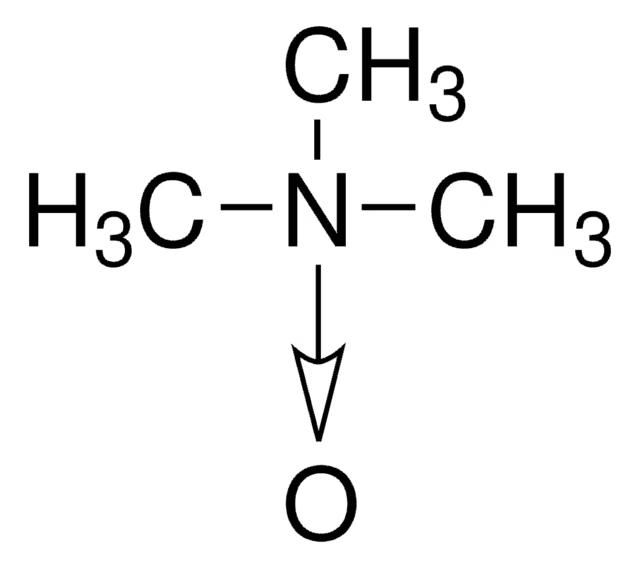
CAS Number1184-78-7
SynonymsTMAO; N,N-Dimethylmethanamine N-oxide; EINECS 214-675-6; Triox; anhydrous trimethylamine oxide; TriMethylaMine N-Oxide; N,N-dimethylmethanamine oxide; Methanamine,N,N-dimethyl-,N-oxide; trimethylamine-N-oxide; Trimethylamine oxide; Triméthylamine-oxyde; Trimethylamineoxid; MFCD00002048; Trimethyloxamine
Molecular Formula(CH3)3N(O)
Molecular Weight75.11
Purity95%
Density0.9301 (rough estimate)
Boiling Point133.8°C (rough estimate)
Melting Point220-222 °C (lit.)
EINECS214-675-6
Symbol
Signal WordWarning
| Chemical & Physical Properties | |
|---|---|
| CAS Number | 1184-78-7 |
| Catalog No. | 2A-9062140 |
| Chinese Name | 三甲胺氧化物 |
| Synonyms | TMAO; N,N-Dimethylmethanamine N-oxide; EINECS 214-675-6; Triox; anhydrous trimethylamine oxide; TriMethylaMine N-Oxide; N,N-dimethylmethanamine oxide; Methanamine,N,N-dimethyl-,N-oxide; trimethylamine-N-oxide; Trimethylamine oxide; Triméthylamine-oxyde; Trimethylamineoxid; MFCD00002048; Trimethyloxamine |
| Molecular Formula | (CH3)3N(O) |
| Molecular Weight | 75.11 |
| Purity | 95 |
| Density | 0.9301 (rough estimate) |
| Boiling Point | 133.8°C (rough estimate) |
| Melting Point | 220-222 °C (lit.) |
| Storage Condition | 1. Keep the container sealed and stored in a cool, |
| Application | Trimethylamine N-oxide is a gut microbe-dependent metabolite of dietary choline and other trimethylamine-containing nutrients. Trimethylamine N-oxide induces inflammation through activation of ROS/NLR |
| EINECS | 214-675-6 |
| HTC | 2921110090 |
| PubChem ID | 24859089 |
| MDL Number | MFCD00002048 |
| SMILES | C[N+](C)(C)[O-] |
| InChI | 1S/C3H9NO/c1-4(2,3)5/h1-3H3 |
| InChI Key | UYPYRKYUKCHHIB-UHFFFAOYSA-N |
| NACRES Code | NA.22 |
| UNSPSC | 12352116 |
| Hazard Symbols | transportation |
| MSDS | msds/62140_1_1184_78_7.pdf |
| Bioactivity | Trimethylamine N-oxide is a gut microbe-dependent metabolite of dietary choline and other trimethylamine-containing nutrients. Trimethylamine N-oxide induces inflammation by activating the ROS/NLRP3 inflammasome. Trimethylamine N-oxide also accelerates fibroblast-myofibroblast differentiation and induces cardiac fibrosis by activating the TGF-β/smad2 signaling pathway[1][2][3]. Related Catalog Signaling Pathways >> Stem Cell/Wnt >> TGF-beta/Smad Research Areas >> Cardiovascular Disease Signaling Pathways >> TGF-beta/Smad >> TGF-beta/Smad Signaling Pathways >> Immunology/Inflammation >> NOD-like Receptor (NLR) Research Areas >> Inflammation/Immunology Target ROS/NLRP3 inflammasome[1] TGF-β/smad2[1] In Vitro The size and migration of fibroblasts are increased after Trimethylamine N-oxide (TMAO) treatment compared with non-treated fibroblasts in vitro. Trimethylamine N-oxide increases TGF-β receptor I expression, which promotes the phosphorylation of Smad2 and up-regulates the expression of α-SMA and collagen I. The ubiquitination of TGF-βRI is decreased in neonatal mouse fibroblasts after Trimethylamine N-oxide treatment. Trimethylamine N-oxide also inhibits the expression of smurf2[2]. Trimethylamine N-oxide is frequently found in the tissues of a variety of marine organisms that protects against the adverse effects of temperature, salinity, high urea and hydrostatic pressure[3]. In Vivo Trimethylamine N-oxide (TMAO) contributes to cardiovascular diseases by promoting inflammatory responses. C57BL/6 mice are fed a normal diet, high-choline diet and/or 3-dimethyl-1-butanol (DMB) diet. The levels of Trimethylamine N-oxide and choline are increased in choline-fed mice. Left ventricular hypertrophy, pulmonary congestion, and diastolic dysfunction are markedly exacerbated in heart failure with preserved ejection fraction (HFpEF) mice fed high-choline diets compared with mice fed the control diet. Myocardial fibrosis and inflammation were markedly increased in HFpEF mice fed high-choline diets compared with animals fed the control diet[1]. References [1]. Wei Shuai, et al. High-choline Diet Exacerbates Cardiac Dysfunction, Fibrosis, and Inflammation in a Mouse Model of Heart Failure With Preserved Ejection Fraction. J Card Fail. 2020 May 14;S1071-9164(19)31802-0. [2]. Wenlong Yang, et al. Gut Microbe-Derived Metabolite Trimethylamine N-oxide Accelerates Fibroblast-Myofibroblast Differentiation and Induces Cardiac Fibrosis. J Mol Cell Cardiol. 2019 Sep;134:119-130. [3]. Manuel T Velasquez, et al. Trimethylamine N-Oxide: The Good, the Bad and the Unknown. Toxins (Basel). 2016 Nov 8;8(11):326. Chemical & Physical Properties Density 0.9301 (rough estimate) Boiling Point 133.8°C (rough estimate) Melting Point 220-222ºC(lit.) Molecular Formula C3H9NO Molecular Weight 75.110 Exact Mass 75.068413 PSA 29.43000 LogP -2.57 Index of Refraction 1.4698 (estimate) InChIKey UYPYRKYUKCHHIB-UHFFFAOYSA-N SMILES C[N+](C)(C)[O-] |
| Use of | Trimethylamine N-oxide is a gut microbe-dependent metabolite of dietary choline and other trimethylamine-containing nutrients. Trimethylamine N-oxide induces inflammation by activating the ROS/NLRP3 inflammasome. Trimethylamine N-oxide also accelerates fibroblast-myofibroblast differentiation and induces cardiac fibrosis by activating the TGF-β/smad2 signaling pathway[1][2][3]. Properties Articles86 Name trimethylamine N-oxide Synonym More Synonyms Trimethylamine oxide Biological Activity Description Trimethylamine N-oxide is a gut microbe-dependent metabolite of dietary choline and other trimethylamine-containing nutrients. Trimethylamine N-oxide induces inflammation by activating the ROS/NLRP3 inflammasome. Trimethylamine N-oxide also accelerates fibroblast-myofibroblast differentiation and induces cardiac fibrosis by activating the TGF-β/smad2 signaling pathway[1][2][3]. Related Catalog Signaling Pathways >> Stem Cell/Wnt >> TGF-beta/Smad Research Areas >> Cardiovascular Disease Signaling Pathways >> TGF-beta/Smad >> TGF-beta/Smad Signaling Pathways >> Immunology/Inflammation >> NOD-like Receptor (NLR) Research Areas >> Inflammation/Immunology ROS/NLRP3 inflammasome[1] TGF-β/smad2[1] In Vitro The size and migration of fibroblasts are increased after Trimethylamine N-oxide (TMAO) treatment compared with non-treated fibroblasts in vitro. Trimethylamine N-oxide increases TGF-β receptor I expression, which promotes the phosphorylation of Smad2 and up-regulates the expression of α-SMA and collagen I. The ubiquitination of TGF-βRI is decreased in neonatal mouse fibroblasts after Trimethylamine N-oxide treatment. Trimethylamine N-oxide also inhibits the expression of smurf2[2]. Trimethylamine N-oxide is frequently found in the tissues of a variety of marine organisms that protects against the adverse effects of temperature, salinity, high urea and hydrostatic pressure[3]. References [1]. Wei Shuai, et al. High-choline Diet Exacerbates Cardiac Dysfunction, Fibrosis, and Inflammation in a Mouse Model of Heart Failure With Preserved Ejection Fraction. J Card Fail. 2020 May 14;S1071-9164(19)31802-0. [2]. Wenlong Yang, et al. Gut Microbe-Derived Metabolite Trimethylamine N-oxide Accelerates Fibroblast-Myofibroblast Differentiation and Induces Cardiac Fibrosis. J Mol Cell Cardiol. 2019 Sep;134:119-130. [3]. Manuel T Velasquez, et al. Trimethylamine N-Oxide: The Good, the Bad and the Unknown. Toxins (Basel). 2016 Nov 8;8(11):326. Chemical & Physical Properties Molecular Formula C3H9NO Exact Mass 75.068413 PSA 29.43000 LogP -2.57 Index of Refraction 1.4698 (estimate) InChIKey UYPYRKYUKCHHIB-UHFFFAOYSA-N SMILES C[N+](C)(C)[O-] |
| Tax Rebate | 9.0% |
| Supervision | A. Customs clearance form for inbound goods B. Customs clearance form for outbound goods |
| Inspection | M.Inspection of imported goods N.Inspection of exported goods |
| Transport Info | Product name: Purity: 0.0% |
| MSDS Transport Info | Module 14. Shipping information 14.1 UN dangerous goods number European Land Transport Dangerous Regulations: -International Maritime Dangerous Regulations: -International Air Transport Dangerous Regulations: - 14.2 Names specified by the United Nations (UN) European Land Transport Dangerous Regulations: Non-dangerous goods IMDG Code: Non-dangerous goods International air transport dangerous goods regulations: non-dangerous goods 14.3 Transport hazard categories European Land Transport Dangerous Regulations: -International Maritime Dangerous Regulations: -International Air Transport Dangerous Regulations: - 14.4 Package group European Land Transport Dangerous Regulations: -International Maritime Dangerous Regulations: -International Air Transport Dangerous Regulations: - 14.5 Environmental hazards European Land Transport Dangerous Regulations: No International Maritime Transport Dangerous Regulations Maritime Pollutants: No International Air Transport Risk Regulations: No 14.6 Special reminder to users No data available |
| Related Products in Specialty Chemicals | ||
|---|---|---|
| Benzoic acid, 2-mercapto-5-nitro- | 99334-37-9 | 2A-9062130 |
| Hydrazine, (2-ethylphenyl)- | 19275-55-9 | 2A-9062131 |
| Hydrazine, (2-methylphenyl)- | 529-27-1 | 2A-9062132 |
| Methyl 4-methyl-4-nitropentanoate | 16507-02-1 | 2A-9062134 |
| 2,3-Dihydro-1,4-benzodioxin-6-ylhydrazine | 299165-45-0 | 2A-9062139 |
| 4-Amino-3,5-dichloro-alpha-bromoacetophenone | 37148-47-3 | 2A-9062146 |
| N-(2-Aminoethyl)glycine | 24123-14-6 | 2A-9062150 |
| 2-Thiazolamine, 5-bromo-4-(1-methylethyl)- | 1025700-49-5 | 2A-9062151 |
| 2-Thiazolamine, 5-bromo-4-methyl- | 3034-57-9 | 2A-9062163 |
| 2-Thiazolamine, 5-chloro-4-methyl- | 5316-76-7 | 2A-9062166 |
| Browse all Specialty Chemicals products » | ||
Phone:
630-322-8886
630-322-8887
Email:
Office Locations:
Chicago, IL, USA
San Francisco, CA, USA


 EN
EN


 SDS
SDS