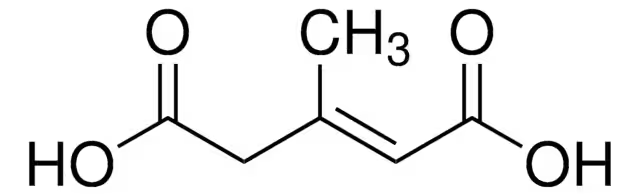
CAS Number5746-90-7
Synonyms3-methyl-pentenedioic acid; 3-METHYL-2-PENTENEDIOIC ACID; glutacouic acide 3-methyl; 3-methylglutaric acid; 3-Methylglutaconsaeure; 3-METHYL-PENT-2-ENEDIOIC ACID; 3-Methyl-pentendisaeure
Molecular FormulaC6H8O4
Molecular Weight144.13
Purity≥98.0 (HPLC)%
Density1.307g/cm3
Boiling Point399.4ºC at 760mmHg
Melting Point101 - 105°C (lit.)
AppearanceOff-white or beige powder
Symbol
Signal WordWarning
| Chemical & Physical Properties | |
|---|---|
| CAS Number | 5746-90-7 |
| Catalog No. | 2A-9060799 |
| Chinese Name | 3-甲基戊烯二酸 |
| Synonyms | 3-methyl-pentenedioic acid; 3-METHYL-2-PENTENEDIOIC ACID; glutacouic acide 3-methyl; 3-methylglutaric acid; 3-Methylglutaconsaeure; 3-METHYL-PENT-2-ENEDIOIC ACID; 3-Methyl-pentendisaeure |
| Molecular Formula | C6H8O4 |
| Molecular Weight | 144.13 |
| Purity | ≥98.0 (HPLC) |
| Density | 1.307g/cm3 |
| Boiling Point | 399.4ºC at 760mmHg |
| Melting Point | 101 - 105°C (lit.) |
| Appearance | Off-white or beige powder |
| Storage Condition | 2-8°C |
| Application | 3-Methylglutaric acid is the major metabolite accumulated in 3-methylglutaric aciduria (MGTA). 3-Methylglutarate can induce lipid oxidative damage and protein oxidation. 3-Methylglutarate reduces non- |
| PubChem ID | 329748259 |
| MDL Number | MFCD01556044 |
| SMILES | C/C(CC(O)=O)=C\C(O)=O |
| InChI | 1S/C6H8O4/c1-4(2-5(7)8)3-6(9)10/h2H,3H2,1H3,(H,7,8)(H,9,10)/b4-2+ |
| InChI Key | WKRBKYFIJPGYQC-DUXPYHPUSA-N |
| Beilstein/REAXYS | 1722907 |
| NACRES Code | NA.24 |
| UNSPSC | 41116107 |
| Hazard Symbols | transportation |
| MSDS | msds/60799_1_5746_90_7.pdf |
| Bioactivity | 3-Methylglutaconic acid is the major metabolites accumulating in 3-Methylglutaconic aciduria (MGTA). 3-Methylglutaconic acid can induce lipid oxidative damage and protein oxidative. 3-Methylglutaconic acid decreases the non-enzymatic antioxidant defenses in cerebral cortex supernatants to elicit oxidative stress in the cerebral cortex. 3-Methylglutaconic acid can be used for brain damage disease research[1]. Related Catalog Research Areas >> Cardiovascular Disease Signaling Pathways >> Others >> Others Signaling Pathways >> Membrane Transporter/Ion Channel >> GABA Receptor Research Areas >> Metabolic Disease Research Areas >> Neurological Disease Signaling Pathways >> Neuronal Signaling >> GABA Receptor References [1]. Guilhian Leipnitz, et al. Induction of oxidative stress by the metabolites accumulating in 3-methylglutaconic aciduria in cerebral cortex of young rats. Life Sci. 2008 Mar 12;82(11-12):652-62. [2]. N L Alsip, et al. Cardiovascular effects of 3-mercaptopropionic acid and levels of GABA in regions of the brain of guinea-pigs. Neuropharmacology. 1984 Mar;23(3):349-57. [3]. E Girardi, et al. 3-mercaptopropionic acid-induced seizures decrease NR2B expression in Purkinje cells: cyclopentyladenosine effect. Cell Mol Neurobiol. 2010 Oct;30(7):985-90. [4]. Leipnitz G, et al. Induction of oxidative stress by the metabolites accumulating in 3-methylglutaconic aciduria in cerebral cortex of young rats. Life Sci. 2008 Mar 12;82(11-12):652-62. Chemical & Physical Properties Density 1.307g/cm3 Boiling Point 399.4ºC at 760mmHg Melting Point 101 - 105°C (lit.) Molecular Formula C6H8O4 Molecular Weight 144.13 Flash Point 209.5ºC Exact Mass 144.04200 PSA 74.60000 LogP 0.49200 Index of Refraction 1.508 InChIKey WKRBKYFIJPGYQC-UHFFFAOYSA-N SMILES CC(=CC(=O)O)CC(=O)O Storage condition 2-8°C |
| Use of | 3-Methylglutaconic acid is the major metabolites accumulating in 3-Methylglutaconic aciduria (MGTA). 3-Methylglutaconic acid can induce lipid oxidative damage and protein oxidative. 3-Methylglutaconic acid decreases the non-enzymatic antioxidant defenses in cerebral cortex supernatants to elicit oxidative stress in the cerebral cortex. 3-Methylglutaconic acid can be used for brain damage disease research[1]. Properties Name 3-methylglutaconic acid Synonym More Synonyms 3-METHYLGLUTACONIC ACID Biological Activity Description 3-Methylglutaconic acid is the major metabolites accumulating in 3-Methylglutaconic aciduria (MGTA). 3-Methylglutaconic acid can induce lipid oxidative damage and protein oxidative. 3-Methylglutaconic acid decreases the non-enzymatic antioxidant defenses in cerebral cortex supernatants to elicit oxidative stress in the cerebral cortex. 3-Methylglutaconic acid can be used for brain damage disease research[1]. Related Catalog Research Areas >> Cardiovascular Disease Signaling Pathways >> Others >> Others Signaling Pathways >> Membrane Transporter/Ion Channel >> GABA Receptor Research Areas >> Metabolic Disease Research Areas >> Neurological Disease Signaling Pathways >> Neuronal Signaling >> GABA Receptor References [1]. Guilhian Leipnitz, et al. Induction of oxidative stress by the metabolites accumulating in 3-methylglutaconic aciduria in cerebral cortex of young rats. Life Sci. 2008 Mar 12;82(11-12):652-62. [2]. N L Alsip, et al. Cardiovascular effects of 3-mercaptopropionic acid and levels of GABA in regions of the brain of guinea-pigs. Neuropharmacology. 1984 Mar;23(3):349-57. [3]. E Girardi, et al. 3-mercaptopropionic acid-induced seizures decrease NR2B expression in Purkinje cells: cyclopentyladenosine effect. Cell Mol Neurobiol. 2010 Oct;30(7):985-90. [4]. Leipnitz G, et al. Induction of oxidative stress by the metabolites accumulating in 3-methylglutaconic aciduria in cerebral cortex of young rats. Life Sci. 2008 Mar 12;82(11-12):652-62. Chemical & Physical Properties Molecular Formula C6H8O4 Exact Mass 144.04200 PSA 74.60000 LogP 0.49200 Index of Refraction 1.508 InChIKey WKRBKYFIJPGYQC-UHFFFAOYSA-N SMILES CC(=CC(=O)O)CC(=O)O |
| Transport Info | Shipping Name: UN |
| MSDS Transport Info | Module 14. Shipping information 14.1 United Nations number European Land Transport Dangerous Regulations: -International Maritime Dangerous Regulations: -International Air Transport Dangerous Regulations: - 14.2 United Nations shipping name European Land Transport Dangerous Regulations: Non-dangerous goods IMDG Code: Non-dangerous goods International air transport dangerous goods regulations: non-dangerous goods 14.3 Transport hazard categories European Land Transport Dangerous Regulations: -International Maritime Dangerous Regulations: -International Air Transport Dangerous Regulations: - 14.4 Package group European Land Transport Dangerous Regulations: -International Maritime Dangerous Regulations: -International Air Transport Dangerous Regulations: - 14.5 Environmental hazards European Land Transport Danger Regulations: No International Maritime Danger Regulations International Air Transport Danger Regulations: No Marine pollutants (yes/no): No 14.6 Special precautions No data available If applicable, the chemical meets the requirements of the Regulations on the Safety Management of Hazardous Chemicals (adopted by the State Council on January 9, 2002). |
| Related Products in Specialty Chemicals | ||
|---|---|---|
| Hexyl-2-Cyanoacrylate | 3578-06-1 | 2A-9060782 |
| poly(hexyl-2-cyanoacrylate) | 26877-39-4 | 2A-9060783 |
| 2-methoxyethyl 2-cyanoacrylate | 27816-23-5 | 2A-9060784 |
| potassium cumenesulphonate | 28085-69-0 | 2A-9060793 |
| ammonium cumenesulphonate | 37475-88-0 | 2A-9060794 |
| 5-ALA HCl | 925-45-1 | 2A-9060801 |
| ethyl (Z)-alpha-(hydroxyimino)-2-(tritylamino)thiazol-4-acetate hydrochloride | 66339-00-2 | 2A-9060802 |
| TEZOSENTAN | 180384-57-0 | 2A-9060806 |
| Edonentan | 210891-04-6 | 2A-9060808 |
| Edonentan | 264609-13-4 | 2A-9060809 |
| Browse all Specialty Chemicals products » | ||
Phone:
630-322-8886
630-322-8887
Email:
Office Locations:
Chicago, IL, USA
San Francisco, CA, USA


 EN
EN


 SDS
SDS