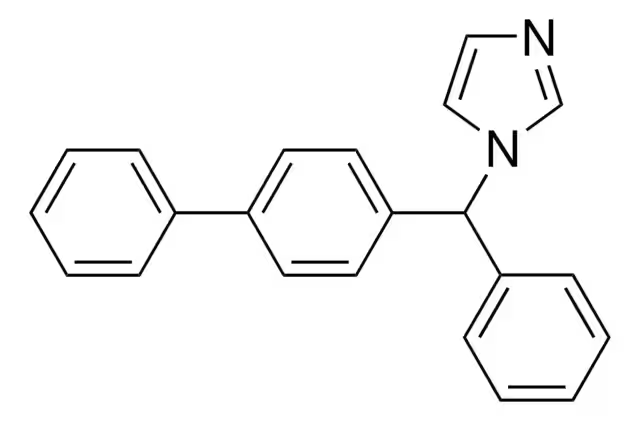
CAS Number60628-96-8
SynonymsBifonazole; 1-[PHENYL-(4-PHENYLPHENYL)-METHYL]IMIDAZOLE; rac-bifonazole; (±)-Bifonazole; (biphenyl-4-yl)phenyl-imidazol-1-ylmethane; 1-[4-Biphenylyl(phenyl)methyl]-1H-imidazole; Canespor; Bifonazol [INN-Spanish]; Azolmen; Trifonazole; EINECS 262-336-6; BAY H 4502; 1-[biphenyl-4-yl(phenyl)methyl]imidazole; Amycor; 1-[biphenyl-4-yl(phenyl)methyl]-1H-imidazole; 1-[Biphenyl-4-yl(phenyl)methyl]-1H-imidazol; Bifazol; 1-(biphenyl-4-yl-phenyl-methyl)-1H-imidazole; (±)-1-(p,a-Diphenylbenzyl)imidazole; 1-([1,1'-Biphenyl]-4-ylphenylmethyl)-1H-imidazole; Bifonazol; Mycospor; Bifonazolum; MFCD00865567
Molecular FormulaC22H18N2
Molecular Weight310.39
Purity98.00%
Density1.1±0.1 g/cm3
Boiling Point491.7±24.0 °C at 760 mmHg
Melting Point142℃
AppearanceSolid;White to Almost white powder to crystal
Symbol
Signal WordWarning
| Chemical & Physical Properties | |
|---|---|
| CAS Number | 60628-96-8 |
| Catalog No. | 2A-9045358 |
| Chinese Name | 联苯苄唑 |
| Synonyms | Bifonazole; 1-[PHENYL-(4-PHENYLPHENYL)-METHYL]IMIDAZOLE; rac-bifonazole; (±)-Bifonazole; (biphenyl-4-yl)phenyl-imidazol-1-ylmethane; 1-[4-Biphenylyl(phenyl)methyl]-1H-imidazole; Canespor; Bifonazol [INN-Spanish]; Azolmen; Trifonazole; EINECS 262-336-6; BAY H 4502; 1-[biphenyl-4-yl(phenyl)methyl]imidazole; Amycor; 1-[biphenyl-4-yl(phenyl)methyl]-1H-imidazole; 1-[Biphenyl-4-yl(phenyl)methyl]-1H-imidazol; Bifazol; 1-(biphenyl-4-yl-phenyl-methyl)-1H-imidazole; (±)-1-(p,a-Diphenylbenzyl)imidazole; 1-([1,1'-Biphenyl]-4-ylphenylmethyl)-1H-imidazole; Bifonazol; Mycospor; Bifonazolum; MFCD00865567 |
| Molecular Formula | C22H18N2 |
| Molecular Weight | 310.39 |
| Purity | 98.00 |
| Density | 1.1±0.1 g/cm3 |
| Boiling Point | 491.7±24.0 °C at 760 mmHg |
| Melting Point | 142℃ |
| Appearance | Solid;White to Almost white powder to crystal |
| Water Solubility | Soluble in: dimethylformamide |
| Storage Condition | Store in a sealed container in a cool, dry place |
| Application | Bifonazole is an imidazole antifungal agent. |
| HTC | 2933290090 |
| PubChem ID | 329773163 |
| SMILES | c1ccc(-c2ccc(C(c3ccccc3)n3ccnc3)cc2)cc1 |
| InChI | InChI=1S/C22H18N2/c1-3-7-18(8-4-1)19-11-13-21(14-12-19)22(24-16-15-23-17-24)20-9-5-2-6-10-20/h1-17,22H |
| InChI Key | OCAPBUJLXMYKEJ-UHFFFAOYSA-N |
| Hazard Symbols | transportation |
| Bioactivity | Bifonazole is an imidazole antifungal drug.Target: AntifungalBifonazole, a new broad-spectrum antimycotic, interferes with sterol biosynthesis. In dermatophytes bifonazole additionally inhibits directly HMG-CoA-reductase. bifonazole possesses a sequential mode of action, namely inhibition of cytochrome P450-dependent C14-demethylation of sterols and direct inhibition of HMG-CoA-reductase. In vitro bifonazole shows a strongly pH-dependent efficacy. The uptake kinetics of bifonazole have been measured with different pathogens [1]. Bifonazole additionally leads to a generally decreased rate of sterol biosynthesis as compared to clotrimazole, due to a direct inhibition of microsomal HMG-CoA-reductase. The additional fungicidal effects of bifonazole are considered to originate from a sequential action by inhibition of HMG-CoA-reductase and of cytochrome P450 [2]. bifonazole were affected by choice of medium with Kimmig's agar generally giving the lowest MIC's. Bifonazole MICs were shown to vary with pH (maximal activity at pH 6 . 5) with selected yeasts when tested on Kimmig's agar [3]. Related Catalog Signaling Pathways >> Anti-infection >> Fungal Research Areas >> Infection References [1]. Berg, D. and M. Plempel, Bifonazole, a biochemist's view. Dermatologica, 1984. 169 Suppl 1: p. 3-9. [2]. Berg, D., et al., Bifonazole and clotrimazole. Their mode of action and the possible reason for the fungicidal behaviour of bifonazole. Arzneimittelforschung, 1984. 34(2): p. 139-46. [3]. Shadomy, S., D.M. Dixon, and R. May, A comparison of bifonazole (BAY H 4502) with clotrimazole in vitro. Sabouraudia, 1982. 20(4): p. 313-23. Chemical & Physical Properties Density 1.1±0.1 g/cm3 Boiling Point 491.7±24.0 °C at 760 mmHg Melting Point 142℃ Molecular Formula C22H18N2 Molecular Weight 310.392 Flash Point 251.2±22.9 °C Exact Mass 310.147003 PSA 17.82000 LogP 4.84 Vapour Pressure 0.0±1.2 mmHg at 25°C Index of Refraction 1.616 InChIKey OCAPBUJLXMYKEJ-UHFFFAOYSA-N SMILES c1ccc(-c2ccc(C(c3ccccc3)n3ccnc3)cc2)cc1 |
| Use of | Bifonazole is an imidazole antifungal drug.Target: AntifungalBifonazole, a new broad-spectrum antimycotic, interferes with sterol biosynthesis. In dermatophytes bifonazole additionally inhibits directly HMG-CoA-reductase. bifonazole possesses a sequential mode of action, namely inhibition of cytochrome P450-dependent C14-demethylation of sterols and direct inhibition of HMG-CoA-reductase. In vitro bifonazole shows a strongly pH-dependent efficacy. The uptake kinetics of bifonazole have been measured with different pathogens [1]. Bifonazole additionally leads to a generally decreased rate of sterol biosynthesis as compared to clotrimazole, due to a direct inhibition of microsomal HMG-CoA-reductase. The additional fungicidal effects of bifonazole are considered to originate from a sequential action by inhibition of HMG-CoA-reductase and of cytochrome P450 [2]. bifonazole were affected by choice of medium with Kimmig's agar generally giving the lowest MIC's. Bifonazole MICs were shown to vary with pH (maximal activity at pH 6 . 5) with selected yeasts when tested on Kimmig's agar [3]. Properties Articles30 Name 1-[phenyl-(4-phenylphenyl)methyl]imidazole Synonym More Synonyms Bifonazole Biological Activity Description Bifonazole is an imidazole antifungal drug.Target: AntifungalBifonazole, a new broad-spectrum antimycotic, interferes with sterol biosynthesis. In dermatophytes bifonazole additionally inhibits directly HMG-CoA-reductase. bifonazole possesses a sequential mode of action, namely inhibition of cytochrome P450-dependent C14-demethylation of sterols and direct inhibition of HMG-CoA-reductase. In vitro bifonazole shows a strongly pH-dependent efficacy. The uptake kinetics of bifonazole have been measured with different pathogens [1]. Bifonazole additionally leads to a generally decreased rate of sterol biosynthesis as compared to clotrimazole, due to a direct inhibition of microsomal HMG-CoA-reductase. The additional fungicidal effects of bifonazole are considered to originate from a sequential action by inhibition of HMG-CoA-reductase and of cytochrome P450 [2]. bifonazole were affected by choice of medium with Kimmig's agar generally giving the lowest MIC's. Bifonazole MICs were shown to vary with pH (maximal activity at pH 6 . 5) with selected yeasts when tested on Kimmig's agar [3]. Related Catalog Signaling Pathways >> Anti-infection >> Fungal Research Areas >> Infection References [1]. Berg, D. and M. Plempel, Bifonazole, a biochemist's view. Dermatologica, 1984. 169 Suppl 1: p. 3-9. [2]. Berg, D., et al., Bifonazole and clotrimazole. Their mode of action and the possible reason for the fungicidal behaviour of bifonazole. Arzneimittelforschung, 1984. 34(2): p. 139-46. [3]. Shadomy, S., D.M. Dixon, and R. May, A comparison of bifonazole (BAY H 4502) with clotrimazole in vitro. Sabouraudia, 1982. 20(4): p. 313-23. Chemical & Physical Properties Molecular Formula C22H18N2 Exact Mass 310.147003 PSA 17.82000 Index of Refraction 1.616 InChIKey OCAPBUJLXMYKEJ-UHFFFAOYSA-N |
| Tax Rebate | 13.0% |
| Supervision | None. MFN tariff: 6.5%. Ordinary tariff: 20.0% |
| Transport Info | Product name: Purity: 98.0% |
| MSDS Transport Info | Module 14. Shipping information 14.1 UN dangerous goods number European Land Transport Dangerous Regulations: -International Maritime Dangerous Regulations: -International Air Transport Dangerous Regulations: - 14.2 Names specified by the United Nations (UN) European Land Transport Dangerous Regulations: Non-dangerous goods IMDG Code: Non-dangerous goods International air transport dangerous goods regulations: non-dangerous goods 14.3 Transport hazard categories European Land Transport Dangerous Regulations: -International Maritime Dangerous Regulations: -International Air Transport Dangerous Regulations: - 14.4 Package group European Land Transport Dangerous Regulations: -International Maritime Dangerous Regulations: -International Air Transport Dangerous Regulations: - 14.5 Environmental hazards European Land Transport Dangerous Regulations: No International Maritime Transport Dangerous Regulations Maritime Pollutants: No International Air Transport Risk Regulations: No 14.6 Special reminder to users No data available |
| Related Products in Specialty Chemicals | ||
|---|---|---|
| Bromodichloroacetonitrile | 60523-73-1 | 2A-9045346 |
| 1-(1,1-Dimethylheptyl)-3,5-dimethoxybenzene | 60526-81-0 | 2A-9045347 |
| Bis(4-chlorophenyl)iodonium hexafluorophosphate | 60565-87-9 | 2A-9045350 |
| N-Methyl-5-homopiperazinone | 60565-89-1 | 2A-9045352 |
| N,N-Dimethyl-3-phenyl-3-hydroxypropylamine | 60577-28-8 | 2A-9045354 |
| 3-Bromopyrazolo[1,5-a]pyridin-2(1H)-one | 60637-30-1 | 2A-9045361 |
| 2-Cyclobutylethylamine | 60637-97-0 | 2A-9045362 |
| L-Proline benzyl ester hydrochloride | 60668-01-1 | 2A-9045364 |
| Big Gastrin I Human | 60675-77-6 | 2A-9045366 |
| (Z)-Methyl 2-acetylamino-3-phenylacrylate | 60676-51-9 | 2A-9045367 |
| Browse all Specialty Chemicals products » | ||
Phone:
630-322-8886
630-322-8887
Email:
Office Locations:
Chicago, IL, USA
San Francisco, CA, USA


 EN
EN


 SDS
SDS