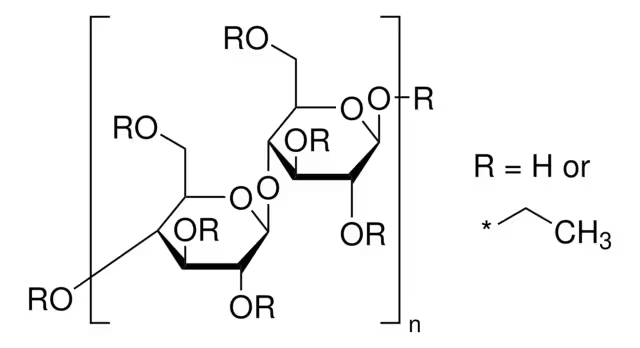
CAS Number9004-57-3
SynonymsEINECS 232-674-9; 2-(Butyl{4-[(E)-(2,6-dicyano-4-nitrophenyl)diazenyl]-3-methylphenyl}amino)ethyl acetate; 2-(Butyl{4-[(E)-(2,6-dicyano-4-nitrophenyl)diazenyl]-3-methylphen yl}amino)ethyl acetate; MFCD00131037; n-butyl-n-(2-acetoxyethyl)-4-((4-nitro-2,6-dicyanophenyl)azo)-3-methylbenzeneamine
Molecular FormulaC23H24N6O4
Molecular Weight448.474
Purity98.00%
Density1.45
Boiling Point654.2±55.0 °C at 760 mmHg
Melting Point240-255ºC
AppearanceWhite to yellowish brown liquid
Symbol
Signal WordWarning
| Chemical & Physical Properties | |
|---|---|
| CAS Number | 9004-57-3 |
| Catalog No. | 2A-9034423 |
| Chinese Name | 乙基纤维素 |
| Synonyms | EINECS 232-674-9; 2-(Butyl{4-[(E)-(2,6-dicyano-4-nitrophenyl)diazenyl]-3-methylphenyl}amino)ethyl acetate; 2-(Butyl{4-[(E)-(2,6-dicyano-4-nitrophenyl)diazenyl]-3-methylphen yl}amino)ethyl acetate; MFCD00131037; n-butyl-n-(2-acetoxyethyl)-4-((4-nitro-2,6-dicyanophenyl)azo)-3-methylbenzeneamine |
| Molecular Formula | C23H24N6O4 |
| Molecular Weight | 448.474 |
| Purity | 98.00 |
| Density | 1.45 |
| Boiling Point | 654.2±55.0 °C at 760 mmHg |
| Melting Point | 240-255ºC |
| Appearance | White to yellowish brown liquid |
| Water Solubility | insoluble |
| Storage Condition | Packed in paper drums lined with polyethylene film |
| Application | Ethylcellulose is a derivative of cellulose. Ethylcellulose is a non-toxic and biodegradable polymer with unique properties such as oleogel formation, delivery of active ingredients, and film-forming |
| SMILES | CCOCC1OC(OC)C(OCC)C(OCC)C1OC1OC(CO)C(OC)C(O)C1O |
| InChI Key | ZZSNKZQZMQGXPY-UHFFFAOYSA-N |
| Hazard Symbols | transportation |
| Risk Codes | R36/37/38 |
| Safety Description | S26;S36 |
| Bioactivity | Ethyl cellulose is a derivative of cellulose. Ethyl cellulose serves as a non-toxic and biodegradable polymer, with unique properties such as oleogel formation, delivery of active component, and film-forming ability in the food and pharmaceutical sectors. Ethyl cellulose can be used as an excipient, such as coating agent, flavoring agent, tablet filler. Pharmaceutical excipients, or pharmaceutical auxiliaries, refer to other chemical substances used in the pharmaceutical process other than pharmaceutical ingredients. Pharmaceutical excipients generally refer to inactive ingredients in pharmaceutical preparations, which can improve the stability, solubility and processability of pharmaceutical preparations. Pharmaceutical excipients also affect the absorption, distribution, metabolism, and elimination (ADME) processes of co-administered drugs[1][2]. Related Catalog Research Areas >> Others Signaling Pathways >> Others >> Others References [1]. Ahmadi P, Jahanban-Esfahlan A, Ahmadi A, et al. Development of ethyl cellulose-based formulations: A perspective on the novel technical methods[J]. Food Reviews International, 2022, 38(4): 685-732. [2]. Elder DP, et al. Pharmaceutical excipients - quality, regulatory and biopharmaceutical considerations. Eur J Pharm Sci. 2016 May 25;87:88-99. Chemical & Physical Properties Density 1.45 Boiling Point 654.2±55.0 °C at 760 mmHg Melting Point 240-255ºC Molecular Formula C23H24N6O4 Molecular Weight 448.474 Flash Point 349.5±31.5 °C Exact Mass 448.185913 PSA 147.66000 LogP 6.62 Vapour Pressure 0.0±2.0 mmHg at 25°C Index of Refraction 1.14 InChIKey ZZSNKZQZMQGXPY-UHFFFAOYSA-N SMILES CCOCC1OC(OC)C(OCC)C(OCC)C1OC1OC(CO)C(OC)C(O)C1O Storage condition room temp Water Solubility insoluble |
| Use of | Ethyl cellulose is a derivative of cellulose. Ethyl cellulose serves as a non-toxic and biodegradable polymer, with unique properties such as oleogel formation, delivery of active component, and film-forming ability in the food and pharmaceutical sectors. Ethyl cellulose can be used as an excipient, such as coating agent, flavoring agent, tablet filler. Pharmaceutical excipients, or pharmaceutical auxiliaries, refer to other chemical substances used in the pharmaceutical process other than pharmaceutical ingredients. Pharmaceutical excipients generally refer to inactive ingredients in pharmaceutical preparations, which can improve the stability, solubility and processability of pharmaceutical preparations. Pharmaceutical excipients also affect the absorption, distribution, metabolism, and elimination (ADME) processes of co-administered drugs[1][2]. Properties Articles40 Name Ethyl cellulose Synonym More Synonyms Ethyl cellulose Biological Activity Description Ethyl cellulose is a derivative of cellulose. Ethyl cellulose serves as a non-toxic and biodegradable polymer, with unique properties such as oleogel formation, delivery of active component, and film-forming ability in the food and pharmaceutical sectors. Ethyl cellulose can be used as an excipient, such as coating agent, flavoring agent, tablet filler. Pharmaceutical excipients, or pharmaceutical auxiliaries, refer to other chemical substances used in the pharmaceutical process other than pharmaceutical ingredients. Pharmaceutical excipients generally refer to inactive ingredients in pharmaceutical preparations, which can improve the stability, solubility and processability of pharmaceutical preparations. Pharmaceutical excipients also affect the absorption, distribution, metabolism, and elimination (ADME) processes of co-administered drugs[1][2]. Related Catalog Research Areas >> Others Signaling Pathways >> Others >> Others References [1]. Ahmadi P, Jahanban-Esfahlan A, Ahmadi A, et al. Development of ethyl cellulose-based formulations: A perspective on the novel technical methods[J]. Food Reviews International, 2022, 38(4): 685-732. [2]. Elder DP, et al. Pharmaceutical excipients - quality, regulatory and biopharmaceutical considerations. Eur J Pharm Sci. 2016 May 25;87:88-99. Chemical & Physical Properties Molecular Formula C23H24N6O4 Exact Mass 448.185913 PSA 147.66000 Index of Refraction 1.14 InChIKey ZZSNKZQZMQGXPY-UHFFFAOYSA-N SMILES CCOCC1OC(OC)C(OCC)C(OCC)C1OC1OC(CO)C(OC)C(O)C1O Storage condition room temp Water Solubility insoluble |
| Transport Info | Product name: Purity: 0.0% |
| MSDS Transport Info | Module 14. Shipping information 14.1 UN number European Land Transport Dangerous Regulations: -International Maritime Dangerous Regulations: -International Air Transport Dangerous Regulations: - 14.2 Names specified by the United Nations (UN) European Land Transport Dangerous Regulations: No dangerous goods IMDG Code: No dangerous goods International Air Transport Dangerous Regulations: No dangerous goods 14.3 Transport hazard categories European Land Transport Dangerous Regulations: -International Maritime Dangerous Regulations: -International Air Transport Dangerous Regulations: - 14.4 Package group European Land Transport Dangerous Regulations: -International Maritime Dangerous Regulations: -International Air Transport Dangerous Regulations: - 14.5 Environmental hazards European Land Transport Dangerous Regulations: No International Maritime Transport Dangerous Regulations Maritime Pollutants: No International Air Transport Risk Regulations: No 14.6 Special precautions for users No data available |
| Related Products in Specialty Chemicals | ||
|---|---|---|
| Chymotrypsin | 9004-07-3 | 2A-9034417 |
| Cellulose microcrystalline | 9004-34-6 | 2A-9034419 |
| taspine | 602-07-3 | 2A-9034420 |
| Dextrin | 9004-53-9 | 2A-9034421 |
| Dextran | 9004-54-0 | 2A-9034422 |
| Hydroxypropyl cellulose | 9004-64-2 | 2A-0200770 |
| Iron-dextran | 9004-66-4 | 2A-9034428 |
| Methyl cellulose | 9004-67-5 | 2A-9034429 |
| Polymethylhydrosiloxane | 9004-73-3 | 2A-9034431 |
| Sodium lauryl polyoxyethylene ether sulfate | 9004-82-4 | 2A-9034434 |
| Browse all Specialty Chemicals products » | ||
Phone:
630-322-8886
630-322-8887
Email:
Office Locations:
Chicago, IL, USA
San Francisco, CA, USA


 EN
EN


 SDS
SDS