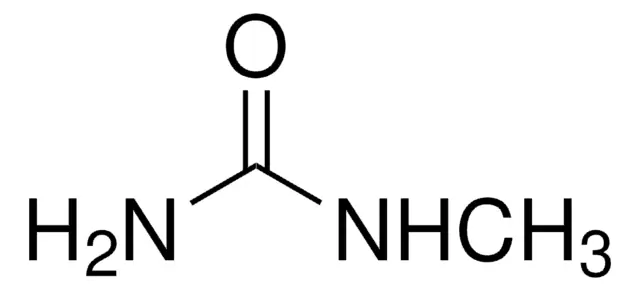
CAS Number684-93-5
SynonymsEINECS 211-678-4; 1-Methyl-1-nitrosourea; N-nitroso-N-methylurea; MFCD00014794
Molecular FormulaCH3NHCONH2
Molecular Weight74.08
Purity97%
Density1.5±0.1 g/cm3
Boiling Point164.3±23.0 °C at 760 mmHg
Melting Point119-124°C
Appearancecrystals
EINECS209-935-0
Symbol
Signal WordWarning
| Chemical & Physical Properties | |
|---|---|
| CAS Number | 684-93-5 |
| Catalog No. | 2A-0201722 |
| Chinese Name | N-甲基-N-亚硝基脲 |
| Synonyms | EINECS 211-678-4; 1-Methyl-1-nitrosourea; N-nitroso-N-methylurea; MFCD00014794 |
| Molecular Formula | CH3NHCONH2 |
| Molecular Weight | 74.08 |
| Purity | 97 |
| Density | 1.5±0.1 g/cm3 |
| Boiling Point | 164.3±23.0 °C at 760 mmHg |
| Melting Point | 119-124°C |
| Appearance | crystals |
| Storage Condition | 2-8°C |
| Packaging | III |
| Application | N-Nitroso-N-methylurea (NMU;MNU;NMH) is a potent carcinogen, mutagen and teratogen. N-Nitroso-N-methylurea is a direct-acting alkylating agent that interacts with DNA. N-Nitroso-N-methylurea targets m |
| EINECS | 209-935-0 |
| PubChem ID | 24897281 |
| MDL Number | MFCD00007950 |
| SMILES | CNC(N)=O |
| InChI | 1S/C2H6N2O/c1-4-2(3)5/h1H3,(H3,3,4,5) |
| InChI Key | XGEGHDBEHXKFPX-UHFFFAOYSA-N |
| Beilstein/REAXYS | 878189 |
| NACRES Code | NA.22 |
| UNSPSC | 12352100 |
| Hazard Symbols | 6.1(b) |
| MSDS | msds/24855_1_684_93_5.pdf |
| Bioactivity | N-Nitroso-N-methylurea (NMU;MNU;NMH) is a potent carcinogen, mutagen and teratogenand. N-Nitroso-N-methylurea is a direct-acting alkylating agent that interacts with DNA. N-Nitroso-N-methylurea targets multiple animal organs to cause various cancer and/or degenerative disease. N-Nitroso-N-methylurea is also a precursor in the synthesis of diazomethane[1][2][3][4]. Related Catalog Research Areas >> Cancer Signaling Pathways >> Cell Cycle/DNA Damage >> DNA Alkylator/Crosslinker In Vitro N-Nitroso-N-methylurea (NMU; 5 μM) treatment increases the cellular NF-κB activity in human malignant keratinocytes. N-Nitroso-N-methylurea also increases the amount of I-κBα phosphorylation[5]. In Vivo N-Nitroso-N-methylurea (NMU) gives intravenously to rats at age 50 days induced mammary carcinomas in 89% of BUF/N, 73% of Sprague-Dawley, and 89% of F344 females. Latent periods are, respectively, 77, 86, and 94 days. Doubling times of NMU-induced primary and transplanted carcinomas are similar to 7 days. Cachexia ensues at the 5th week from the onset of the first tumor. When the tumor is larger than 15 g, hypercalcemia is usually observed[1]. References [1]. Gullino PM, et al. N-nitrosomethylurea as mammary gland carcinogen in rats. J Natl Cancer Inst. 1975 Feb;54(2):401-14. [2]. Tsubura A, et al. Review: Animal models of N-Methyl-N-nitrosourea-induced mammary cancer and retinal degeneration with special emphasis on therapeutic trials. In Vivo. 2011 Jan-Feb;25(1):11-22. [3]. Johnson EM, et al. Effects of N-nitroso-N-methylurea on enzymatic ontogeny associated with teratogenesis. Teratology. 1968 May;1(2):179-91. [4]. Silvia Garbarino, et al. One-pot synthesis of α-haloketones employing a membrane-based semibatch diazomethane generator. Journal of Flow Chemistry volume 6, pages211-217(2016). [5]. Moon KY. N-nitroso-N-methylurea and N-nitroso-N-ethylurea induce upregulation of cellular NF-kappa B activity through protein kinase C-dependent pathway in human malignant keratinocytes. Arch Pharm Res. 2010 Jan;33(1):133-9. Chemical & Physical Properties Density 1.5±0.1 g/cm3 Boiling Point 164.3±23.0 °C at 760 mmHg Melting Point 119-124°C Molecular Formula C2H5N3O2 Molecular Weight 103.080 Flash Point 53.1±22.6 °C Exact Mass 103.038177 PSA 75.76000 LogP -0.03 Vapour Pressure 2.0±0.3 mmHg at 25°C Index of Refraction 1.545 InChIKey ZRKWMRDKSOPRRS-UHFFFAOYSA-N SMILES CN(N=O)C(N)=O Storage condition 2-8°C Stability Stable. Flammable. Incompatible with strong oxidizing agents, strong bases, strong acids. |
| Use of | N-Nitroso-N-methylurea (NMU;MNU;NMH) is a potent carcinogen, mutagen and teratogenand. N-Nitroso-N-methylurea is a direct-acting alkylating agent that interacts with DNA. N-Nitroso-N-methylurea targets multiple animal organs to cause various cancer and/or degenerative disease. N-Nitroso-N-methylurea is also a precursor in the synthesis of diazomethane[1][2][3][4]. Properties Articles62 Name N-methyl-N-nitrosourea Synonym More Synonyms N-Nitroso-N-methylurea Biological Activity Description N-Nitroso-N-methylurea (NMU;MNU;NMH) is a potent carcinogen, mutagen and teratogenand. N-Nitroso-N-methylurea is a direct-acting alkylating agent that interacts with DNA. N-Nitroso-N-methylurea targets multiple animal organs to cause various cancer and/or degenerative disease. N-Nitroso-N-methylurea is also a precursor in the synthesis of diazomethane[1][2][3][4]. Related Catalog Research Areas >> Cancer Signaling Pathways >> Cell Cycle/DNA Damage >> DNA Alkylator/Crosslinker In Vitro N-Nitroso-N-methylurea (NMU; 5 μM) treatment increases the cellular NF-κB activity in human malignant keratinocytes. N-Nitroso-N-methylurea also increases the amount of I-κBα phosphorylation[5]. References [1]. Gullino PM, et al. N-nitrosomethylurea as mammary gland carcinogen in rats. J Natl Cancer Inst. 1975 Feb;54(2):401-14. [2]. Tsubura A, et al. Review: Animal models of N-Methyl-N-nitrosourea-induced mammary cancer and retinal degeneration with special emphasis on therapeutic trials. In Vivo. 2011 Jan-Feb;25(1):11-22. [3]. Johnson EM, et al. Effects of N-nitroso-N-methylurea on enzymatic ontogeny associated with teratogenesis. Teratology. 1968 May;1(2):179-91. [4]. Silvia Garbarino, et al. One-pot synthesis of α-haloketones employing a membrane-based semibatch diazomethane generator. Journal of Flow Chemistry volume 6, pages211-217(2016). [5]. Moon KY. N-nitroso-N-methylurea and N-nitroso-N-ethylurea induce upregulation of cellular NF-kappa B activity through protein kinase C-dependent pathway in human malignant keratinocytes. Arch Pharm Res. 2010 Jan;33(1):133-9. Chemical & Physical Properties Molecular Formula C2H5N3O2 Exact Mass 103.038177 PSA 75.76000 LogP -0.03 Index of Refraction 1.545 InChIKey ZRKWMRDKSOPRRS-UHFFFAOYSA-N SMILES CN(N=O)C(N)=O Stability Stable. Flammable. Incompatible with strong oxidizing agents, strong bases, strong acids. |
| Transport Info | Product name: Chemical name |
| Related Products in Specialty Chemicals | ||
|---|---|---|
| Tetrapropoxysilane | 682-01-9 | 2A-9024844 |
| Ethylicin | 682-91-7 | 2A-9024846 |
| Diethyl methylphosphonate | 683-08-9 | 2A-9024847 |
| Dibutyltin dichloride | 683-18-1 | 2A-9024849 |
| 3,3,3-Trifluorolactic acid | 684-07-1 | 2A-9024853 |
| N-Methyl-bis(trifluoroacetamide) | 685-27-8 | 2A-9024856 |
| Hexafluoro-1,3-butadiene | 685-63-2 | 2A-9024857 |
| Bis(diethylamino)chlorophosphine | 685-83-6 | 2A-9024858 |
| Diethyl bromomalonate | 685-87-0 | 2A-9024859 |
| Diethylacetamide | 685-91-6 | 2A-9024861 |
| Browse all Specialty Chemicals products » | ||
Phone:
630-322-8886
630-322-8887
Email:
Office Locations:
Chicago, IL, USA
San Francisco, CA, USA


 EN
EN


 SDS
SDS