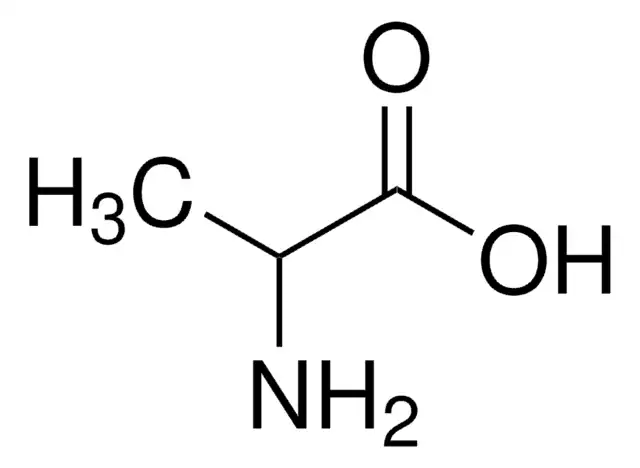
CAS Number302-72-7
Synonyms(R,S)-Alanine; (±)-Alanine; (±)-2-Aminopropionic acid; 2-amino-propanoic acid; DL-2-aminopropionic acid; α-Aminopropanoic acid; 2-Aminopropanoic acid; ZY1&VQ; Alanine,DL; EINECS 206-126-4; Alanine; α-Aminopropionic acid; d,l-alanine; UNII:1FU7983T0U; α-Alanine; 2-Aminopropionic Acid; DL-α-Aminopropionic acid; MFCD00064408; H-DL-Ala-OH; DL-2-Aminopropanoic acid; DL-α-Alanine; DL-Aminopropanoic acid; Methyl glycine
Molecular FormulaCH3CH(NH2)COOH
Molecular Weight89.09
Purity≥99 (HPLC)%
Density1.2±0.1 g/cm3
Boiling Point212.9±23.0 °C at 760 mmHg
Melting Point289 °C (dec.) (lit.)
Appearancepowder
EINECS206-126-4
Symbol
Signal WordWarning
| Chemical & Physical Properties | |
|---|---|
| CAS Number | 302-72-7 |
| Catalog No. | 2A-9021171 |
| Chinese Name | DL-2-氨基丙酸 |
| Synonyms | (R,S)-Alanine; (±)-Alanine; (±)-2-Aminopropionic acid; 2-amino-propanoic acid; DL-2-aminopropionic acid; α-Aminopropanoic acid; 2-Aminopropanoic acid; ZY1&VQ; Alanine,DL; EINECS 206-126-4; Alanine; α-Aminopropionic acid; d,l-alanine; UNII:1FU7983T0U; α-Alanine; 2-Aminopropionic Acid; DL-α-Aminopropionic acid; MFCD00064408; H-DL-Ala-OH; DL-2-Aminopropanoic acid; DL-α-Alanine; DL-Aminopropanoic acid; Methyl glycine |
| Molecular Formula | CH3CH(NH2)COOH |
| Molecular Weight | 89.09 |
| Purity | ≥99 (HPLC) |
| Density | 1.2±0.1 g/cm3 |
| Boiling Point | 212.9±23.0 °C at 760 mmHg |
| Melting Point | 289 °C (dec.) (lit.) |
| Appearance | powder |
| Water Solubility | 156 g/L (20 ºC) |
| Storage Condition | Store in a sealed and cool place away from light. |
| Application | DL-alanine is an amino acid that is a racemic compound of L- and D-alanine. DL-alanine is used as a reducing agent and capping agent together with aqueous silver nitrate solution to produce nanopartic |
| EINECS | 206-126-4 |
| HTC | 2936240000 |
| PubChem ID | 24891244 |
| MDL Number | MFCD00064408 |
| SMILES | CC(N)C(O)=O |
| InChI | 1S/C3H7NO2/c1-2(4)3(5)6/h2H,4H2,1H3,(H,5,6) |
| InChI Key | QNAYBMKLOCPYGJ-UHFFFAOYSA-N |
| Beilstein/REAXYS | 1720250 |
| NACRES Code | NA.26 |
| UNSPSC | 12352209 |
| Hazard Symbols | Transport |
| MSDS | msds/21171_1_302_72_7.pdf |
| Bioactivity | DL-alanine, an amino acid, is the racemic compound of L- and D-alanine. DL-alanine is employed both as a reducing and a capping agent, used with silver nitrate aqueous solutions for the production of nanoparticles. DL-alanine can be used for the research of transition metals chelation, such as Cu(II), Zn(II), Cd(11). DL-alanine, a sweetener, is classed together with glycine, and sodium saccharin. DL-alanine plays a key role in the glucose-alanine cycle between tissues and liver[1][2][3][4][5][6]. Related Catalog Research Areas >> Metabolic Disease Target Human Endogenous Metabolite References [1]. Yamaguchi M, et al. Terahertz absorption spectra of L-, D-, and DL-alanine and their application to determination of enantiometric composition[J]. Applied Physics Letters, 2005, 86(5): 053903. [2]. Eder José Guidelli, et, al. Synthesis of silver nanoparticles using dl-alanine for ESR dosimetry applications. Radiation Physics and Chemistry. Volume 81, Issue 3, 2012: Pages 301-307. [3]. Amrallah AH, et al. Mixed ligand complexes of benzimidazole and pyrimidine hydroxy azo dyes with some transition metals and glycine, dl-alanine or dl-leucine. Talanta. 1998 Aug;46(4):491-500. [4]. Yamamoto T, et al. Gustatory reaction time to various sweeteners in human adults. Physiol Behav. 1985 Sep;35(3):411-5. [5]. Rashid M, et al. Biosynthesis of Self-Dispersed Silver Colloidal Particles Using the Aqueous Extract of P. peruviana for Sensing dl-Alanine[J]. Isrn Nanotechnology, 2014, 2014:1-7. [6]. Tapper DN, et al. Taste stimuli: a behavioral categorization. Science. 1968 Aug 16;161(3842):708-10. Chemical & Physical Properties Density 1.2±0.1 g/cm3 Boiling Point 212.9±23.0 °C at 760 mmHg Melting Point 272-275ºC Molecular Formula C3H7NO2 Molecular Weight 89.093 Flash Point 82.6±22.6 °C Exact Mass 89.047676 PSA 63.32000 LogP -0.68 Vapour Pressure 0.1±0.9 mmHg at 25°C Index of Refraction 1.460 InChIKey QNAYBMKLOCPYGJ-UHFFFAOYSA-N SMILES CC(N)C(=O)O Storage condition Store at RT. Stability Stable. Incompatible with strong oxidizing agents. Water Solubility 156 g/L (20 ºC) |
| Use of | DL-alanine, an amino acid, is the racemic compound of L- and D-alanine. DL-alanine is employed both as a reducing and a capping agent, used with silver nitrate aqueous solutions for the production of nanoparticles. DL-alanine can be used for the research of transition metals chelation, such as Cu(II), Zn(II), Cd(11). DL-alanine, a sweetener, is classed together with glycine, and sodium saccharin. DL-alanine plays a key role in the glucose-alanine cycle between tissues and liver[1][2][3][4][5][6]. Properties Articles592 Name alanine Synonym More Synonyms DL-Alanine Biological Activity Description DL-alanine, an amino acid, is the racemic compound of L- and D-alanine. DL-alanine is employed both as a reducing and a capping agent, used with silver nitrate aqueous solutions for the production of nanoparticles. DL-alanine can be used for the research of transition metals chelation, such as Cu(II), Zn(II), Cd(11). DL-alanine, a sweetener, is classed together with glycine, and sodium saccharin. DL-alanine plays a key role in the glucose-alanine cycle between tissues and liver[1][2][3][4][5][6]. Related Catalog Research Areas >> Metabolic Disease Human Endogenous Metabolite References [1]. Yamaguchi M, et al. Terahertz absorption spectra of L-, D-, and DL-alanine and their application to determination of enantiometric composition[J]. Applied Physics Letters, 2005, 86(5): 053903. [2]. Eder José Guidelli, et, al. Synthesis of silver nanoparticles using dl-alanine for ESR dosimetry applications. Radiation Physics and Chemistry. Volume 81, Issue 3, 2012: Pages 301-307. [3]. Amrallah AH, et al. Mixed ligand complexes of benzimidazole and pyrimidine hydroxy azo dyes with some transition metals and glycine, dl-alanine or dl-leucine. Talanta. 1998 Aug;46(4):491-500. [4]. Yamamoto T, et al. Gustatory reaction time to various sweeteners in human adults. Physiol Behav. 1985 Sep;35(3):411-5. [5]. Rashid M, et al. Biosynthesis of Self-Dispersed Silver Colloidal Particles Using the Aqueous Extract of P. peruviana for Sensing dl-Alanine[J]. Isrn Nanotechnology, 2014, 2014:1-7. [6]. Tapper DN, et al. Taste stimuli: a behavioral categorization. Science. 1968 Aug 16;161(3842):708-10. Chemical & Physical Properties Molecular Formula C3H7NO2 Exact Mass 89.047676 PSA 63.32000 LogP -0.68 Index of Refraction 1.460 InChIKey QNAYBMKLOCPYGJ-UHFFFAOYSA-N SMILES CC(N)C(=O)O Storage condition Store at RT. Stability Stable. Incompatible with strong oxidizing agents. |
| Tax Rebate | 9.0% |
| Supervision | A. Customs clearance form for inbound goods B. Customs clearance form for outbound goods |
| Inspection | P. Quarantine of entry animals, plants, and animal and plant products Q. Quarantine of exit animals, plants, and animal and plant products R. Hygiene supervision and inspection of imported food S. Hyg |
| Transport Info | Product name: Purity: 0.0% |
| MSDS Transport Info | Module 14. Shipping information 14.1 UN dangerous goods number European Land Transport Dangerous Regulations: -International Maritime Dangerous Regulations: -International Air Transport Dangerous Regulations: - 14.2 Names specified by the United Nations (UN) European Land Transport Dangerous Regulations: Non-dangerous goods IMDG Code: Non-dangerous goods International air transport dangerous goods regulations: non-dangerous goods 14.3 Transport hazard categories European Land Transport Dangerous Regulations: -International Maritime Dangerous Regulations: -International Air Transport Dangerous Regulations: - 14.4 Package group European Land Transport Dangerous Regulations: -International Maritime Dangerous Regulations: -International Air Transport Dangerous Regulations: - 14.5 Environmental hazards European Land Transport Dangerous Regulations: No International Maritime Transport Dangerous Regulations Maritime Pollutants: No International Air Transport Risk Regulations: No 14.6 Special reminder to users No data available The above information is believed to be correct, but is not all-inclusive and should be used as a guide only. The information in this document is based on our current knowledge and is Correct safety instructions apply to this product. This information does not represent a warranty as to the properties of this product. See reverse side of invoice or packing slip. |
| Related Products in Specialty Chemicals | ||
|---|---|---|
| Hydroxyaluminum distearate | 300-92-5 | 2A-9021160 |
| Oleamide | 301-02-0 | 2A-9021161 |
| Stannous octoate | 301-10-0 | 2A-9021163 |
| Methylhydrazine sulfate | 302-15-8 | 2A-9021165 |
| Benactyzine | 302-40-9 | 2A-9021170 |
| DL-Serine | 302-84-1 | 2A-9021173 |
| Sodium deoxycholate | 302-95-4 | 2A-9021174 |
| 2,6-Dihydroxybenzoic acid | 303-07-1 | 2A-9021177 |
| Methenolone enanthate | 303-42-4 | 2A-9021180 |
| Cholesteryl oleate | 303-43-5 | 2A-9021181 |
| Browse all Specialty Chemicals products » | ||
Phone:
630-322-8886
630-322-8887
Email:
Office Locations:
Chicago, IL, USA
San Francisco, CA, USA


 EN
EN


 SDS
SDS