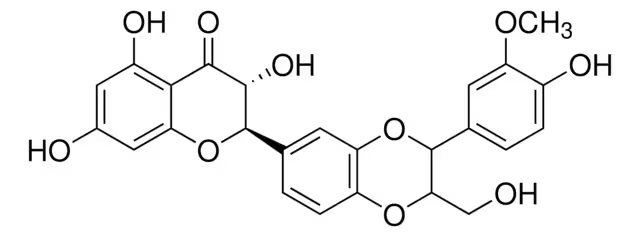
CAS Number462-20-4
SynonymsDL-Dihydrolipoic acid; dihydrothiocticacid; Dihydroliponsure; (±)-dihydrolipoic acid; Gamma-Lipoic Acid; 6,8-Dimercaptooctanoic acid; 6,8-Disulfanyloctanoic acid; dihydro-thiocticaci; dihydrolipoate; DIHYDROLIPOIC ACID; usafxr-12; dihydro-lipoicaci; DHLA; 6,8-Dihydrothioctic acid; reducedlipoicacid
Molecular FormulaC8H16O2S2
Molecular Weight208.34
Purity98.00%
Density1.1±0.1 g/cm3
Boiling Point360.8±32.0 °C at 760 mmHg
Melting Point60ºC
AppearanceLight yellow liquid
Symbol
Signal WordWarning
| Chemical & Physical Properties | |
|---|---|
| CAS Number | 462-20-4 |
| Catalog No. | 2A-1189819 |
| Chinese Name | 二氢硫辛酸 |
| Synonyms | DL-Dihydrolipoic acid; dihydrothiocticacid; Dihydroliponsure; (±)-dihydrolipoic acid; Gamma-Lipoic Acid; 6,8-Dimercaptooctanoic acid; 6,8-Disulfanyloctanoic acid; dihydro-thiocticaci; dihydrolipoate; DIHYDROLIPOIC ACID; usafxr-12; dihydro-lipoicaci; DHLA; 6,8-Dihydrothioctic acid; reducedlipoicacid |
| Molecular Formula | C8H16O2S2 |
| Molecular Weight | 208.34 |
| Purity | 98.00 |
| Density | 1.1±0.1 g/cm3 |
| Boiling Point | 360.8±32.0 °C at 760 mmHg |
| Melting Point | 60ºC |
| Appearance | Light yellow liquid |
| Storage Condition | +2C to +8C |
| Application | Dihydrolipoic acid (DHLA) is an excellent antioxidant that can scavenge almost all oxygen-centered free radicals [1]. Dihydrolipoic acid has anti-inflammatory properties in various diseases. Dihydroli |
| HTC | 2930909090 |
| PubChem ID | 5635344 |
| MDL Number | MFCD00166974 |
| SMILES | O=C(O)CCCCC(S)CCS |
| InChI | InChI=1S/C8H16O2S2/c9-8(10)4-2-1-3-7(12)5-6-11/h7,11-12H,1-6H2,(H,9,10) |
| InChI Key | IZFHEQBZOYJLPK-UHFFFAOYSA-N |
| NACRES Code | NA.77 |
| UNSPSC | 12352106 |
| Hazard Symbols | transportation |
| Bioactivity | Dihydrolipoic Acid (DHLA) is an excellent antioxidant capable of scavenging almost any oxygen-centered radical[1]. Dihydrolipoic acid exhibits anti-inflammatory properties in various diseases. Dihydrolipoic Acid exerts a preventive effect via ERK/Nrf2/HO-1/ROS/NLRP3 pathway in LPS-induced sickness behavior rats. Dihydrolipoic Acid can be used for the reaserch of depression[2]. Related Catalog Research Areas >> Inflammation/Immunology Research Areas >> Neurological Disease In Vitro Dihydrolipoic Acid is an antioxidant. DHLA is capable of scavenging •OH radicals and scavenging superoxide radical anions with a rate constant of 3.3×10⁵ M-1 s-1. Dihydrolipoic Acid is an excellent antioxidant, and that is very important because O2•- is a relatively mild oxidant that is therefore much more selective and can be useful to discriminate between the antioxidant capacities of different substrates[1]. In Vivo Dihydrolipoic Acid (DHLA) treatment exerts preventive effects in LPS-induced sickness behavior rats. Dihydrolipoic Acid increases the expression of ERK, Nrf2, and HO-1 but decreases the ROS generation levels and reduces the expression of NLRP3, caspase-1, and IL-1β in LPS-induced sickness behavior rats. Dihydrolipoic Acid is a reduced form of α-lipoic acid (LA) that can decrease oxidative stress and act as a strong antioxidant[2]. Dihydrolipoic Acid treatment reverses the LPS-induced sickness behavior[2]. Animal Model: Adult male Sprague-Dawley (SD) rats (weight, 200-220 g)[2] Dosage: 15 mg/kg, 30 mg/kg, 60 mg/kg Administration: Injected intraperitoneally daily Result: Treatment with 30 mg/kg and 60 mg/kg improved the body weight gain as compared to the LPS group. References [1]. Romina Castañeda-Arriaga, et al. Lipoic acid and dihydrolipoic acid. A comprehensive theoretical study of their antioxidant activity supported by available experimental kinetic data. J Chem Inf Model. 2014 Jun 23;54(6):1642-52. [2]. Hetao Bian, et al. Dihydrolipoic acid protects against lipopolysaccharide-induced behavioral deficits and neuroinflammation via regulation of Nrf2/HO-1/NLRP3 signaling in rat. J Neuroinflammation. 2020 May 25;17(1):166. Chemical & Physical Properties Density 1.1±0.1 g/cm3 Boiling Point 360.8±32.0 °C at 760 mmHg Melting Point 60ºC Molecular Formula C8H16O2S2 Molecular Weight 208.341 Flash Point 172.0±25.1 °C Exact Mass 208.059174 PSA 114.90000 LogP 2.07 Vapour Pressure 0.0±1.7 mmHg at 25°C Index of Refraction 1.527 InChIKey IZFHEQBZOYJLPK-UHFFFAOYSA-N SMILES O=C(O)CCCCC(S)CCS Storage condition +2C to +8C |
| Use of | Properties Articles37 Name dihydrolipoic acid Synonym More Synonyms Dihydrolipoic acid Biological Activity Related Catalog Research Areas >> Inflammation/Immunology Research Areas >> Neurological Disease In Vitro Dihydrolipoic Acid is an antioxidant. DHLA is capable of scavenging •OH radicals and scavenging superoxide radical anions with a rate constant of 3.3×10⁵ M-1 s-1. Dihydrolipoic Acid is an excellent antioxidant, and that is very important because O2•- is a relatively mild oxidant that is therefore much more selective and can be useful to discriminate between the antioxidant capacities of different substrates[1]. References [1]. Romina Castañeda-Arriaga, et al. Lipoic acid and dihydrolipoic acid. A comprehensive theoretical study of their antioxidant activity supported by available experimental kinetic data. J Chem Inf Model. 2014 Jun 23;54(6):1642-52. Chemical & Physical Properties Molecular Formula C8H16O2S2 Exact Mass 208.059174 PSA 114.90000 Index of Refraction 1.527 InChIKey IZFHEQBZOYJLPK-UHFFFAOYSA-N SMILES O=C(O)CCCCC(S)CCS |
| Tax Rebate | 13.0% |
| Supervision | None. MFN tariff: 6.5%. Ordinary tariff: 30.0% |
| Transport Info | Shipping Name: UN |
| MSDS Transport Info | Module 14. Shipping information 14.1 UN dangerous goods number European Land Transport Dangerous Regulations: -International Maritime Dangerous Regulations: -International Air Transport Dangerous Regulations: - 14.2 United Nations shipping name European Land Transport Dangerous Regulations: Non-dangerous goods IMDG Code: Non-dangerous goods International air transport dangerous goods regulations: non-dangerous goods 14.3 Transport hazard categories European Land Transport Dangerous Regulations: -International Maritime Dangerous Regulations: -International Air Transport Dangerous Regulations: - 14.4 Package group European Land Transport Dangerous Regulations: -International Maritime Dangerous Regulations: -International Air Transport Dangerous Regulations: - 14.5 Environmental hazards European Land Transport Danger Regulations: No International Maritime Danger Regulations International Air Transport Danger Regulations: No Marine pollutants (yes/no): No 14.6 Special reminder to users No data available The above information is believed to be correct, but is not all-inclusive and should be used as a guide only. The information in this document is based on our current knowledge and is Correct safety instructions apply to this product. This information does not represent a warranty as to the properties of this product. See reverse side of invoice or packing slip. |
| Related Products in Specialty Chemicals | ||
|---|---|---|
| 5-Bromo-2-methyl-benzoic acid tert-butyl ester | 1202551-75-4 | 2A-2189844 |
| N-Ethyl-3-methyl-2-nitroaniline | 160984-53-2 | 2A-2189845 |
| 1,1'-Biphenyl, 2,2'-dibromo-4,4'-dimethyl- | 85590-05-2 | 2A-2189850 |
| 1-broMo-6-phenyl-Pyrene | 294881-47-3 | 2A-2189852 |
| 5-chloro-6-hydroxy-1H-pyrimidin-4-one | 1193-56-2 | 2A-2189853 |
| MONOPEROXYPHTHALIC ACID MAGNESIUM SALT, HEXAHYDRATE | 78948-87-5 | 2A-1189855 |
| 2-Chloro-6-methyl-N-phenylbenzamide | 1386861-46-6 | 2A-2189858 |
| N-[(9H-Fluoren-9-ylmethoxy)carbonyl]glycylglycylglycylglycine | 1001202-16-9 | 2A-2189861 |
| H-ALA-OALL HCL | 203799-82-0 | 2A-2189862 |
| N-alpha-Allyloxycarbonyl-N-epsilon-(9-fluorenylmethyloxycarbonyl)-L-lysine | 186350-56-1 | 2A-2189863 |
| Browse all Specialty Chemicals products » | ||
Phone:
630-322-8886
630-322-8887
Email:
Office Locations:
Chicago, IL, USA
San Francisco, CA, USA


 EN
EN


 SDS
SDS