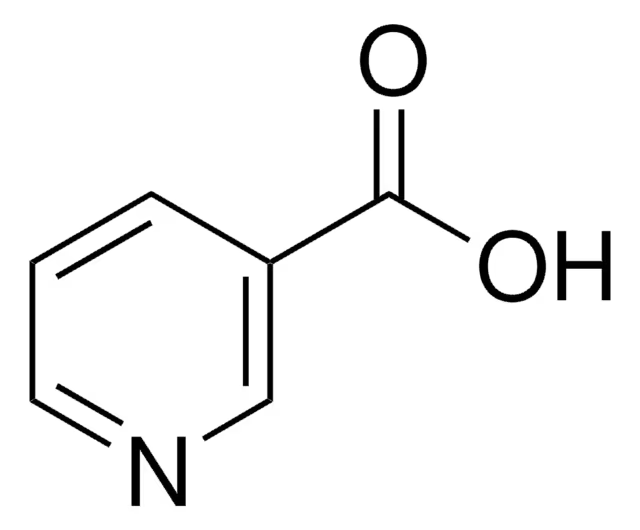
CAS Number59-67-6
Synonyms3-Pyridinecarboxylic acid; Vitamin B3; 5-22-02-00057 (Beilstein Handbook Reference); 3-Pyridylcarboxylic acid; MFCD00006391; P. P. Factor; Pyridine-3-carboxylic acid; Pyridine-β-carboxylic acid; P.P. factor-pellagra preventive factor; T6NJ CVQ; Nicotinamide; EINECS 200-441-0; antipellagra vitamin; nicotinic acid; Niacin
Molecular FormulaC6H5NO2
Molecular Weight123.11
Purity≥99.5 (HPLC)%
Density1.473
Boiling Point292.5±13.0 °C at 760 mmHg
Melting Point234-238 °C
Appearancepowder
EINECS200-441-0
Symbol
Signal WordWarning
| Chemical & Physical Properties | |
|---|---|
| CAS Number | 59-67-6 |
| Catalog No. | 2A-9015160 |
| Chinese Name | 烟酸 |
| Synonyms | 3-Pyridinecarboxylic acid; Vitamin B3; 5-22-02-00057 (Beilstein Handbook Reference); 3-Pyridylcarboxylic acid; MFCD00006391; P. P. Factor; Pyridine-3-carboxylic acid; Pyridine-β-carboxylic acid; P.P. factor-pellagra preventive factor; T6NJ CVQ; Nicotinamide; EINECS 200-441-0; antipellagra vitamin; nicotinic acid; Niacin |
| Molecular Formula | C6H5NO2 |
| Molecular Weight | 123.11 |
| Purity | ≥99.5 (HPLC) |
| Density | 1.473 |
| Boiling Point | 292.5±13.0 °C at 760 mmHg |
| Melting Point | 234-238 °C |
| Appearance | powder |
| Water Solubility | 1-5 g/100 mL at 17 ºC |
| Storage Condition | This product should be sealed and stored away from |
| Application | Niacin (Vitamin B3) is a water-soluble vitamin and a member of the vitamin B family. |
| EINECS | 200-441-0 |
| HTC | 29362990 |
| PubChem ID | 57652411 |
| MDL Number | MFCD00006391 |
| SMILES | OC(=O)c1cccnc1 |
| InChI | 1S/C6H5NO2/c8-6(9)5-2-1-3-7-4-5/h1-4H,(H,8,9) |
| InChI Key | PVNIIMVLHYAWGP-UHFFFAOYSA-N |
| Beilstein/REAXYS | 109591 |
| NACRES Code | NA.26 |
| UNSPSC | 12352209 |
| Hazard Symbols | 6.1 |
| MSDS | msds/15160_1_59_67_6.pdf |
| Bioactivity | Niacin (Vitamin B3) is a water-soluble vitamin and is part of the vitamin B group.Target: OthersNiacin (also known as vitamin B3 and nicotinic acid) is an organic compound with the formula C6H5NO2 and, depending on the definition used, one of the 20 to 80 essential human nutrients. Not enough niacin in the diet can cause nausea, skin and mouth lesions, anemia, headaches, and tiredness. Chronic Niacin deficiency leads to a disease called pellagra. The lack of niacin may also be observed in pandemic deficiency disease which is caused by a lack of five crucial vitamins: niacin,vitamin C, thiamin, vitamin D and vitamin A, and is usually found in areas of widespread poverty and malnutrition.Niacin has been used for over 50 years to increase levels of HDL in the blood and has been found to decrease the risk of cardiovascular events modestly in a number of controlled human trials. Niacin cannot be directly converted to nicotinamide, but both compounds could be converted to and are precursors of NAD and NADP in vivo.Nicotinic acid, nicotinamide, and tryptophan (via quinoline acid) are co-factors for nicotinamide adenine dinucleotide (NAD) and nicotinamide adenine dinucleotide phosphate (NADP). NAD converts to NADP by phosphorylation in the presence of the enzyme NAD+ kinase. NADP and NAD are coenzyme for many dehydrogenases, participating in many hydrogen transfer processes. NAD is important in catabolism of fat, carbohydrate, protein, and alcohol, as well as cell signaling and DNA repair, and NADP mostly in anabolism reactions such as fatty acid and cholesterol synthesis.High energy requirements (brain) or high turnover rate (gut, skin) organs are usually the most susceptible to their deficiency. Related Catalog Signaling Pathways >> Autophagy >> Autophagy Natural Products >> Others Research Areas >> Metabolic Disease Target Human Endogenous Metabolite References [1]. Bruckert E, et al. Meta-analysis of the effect of nicotinic acid alone or in combination on cardiovascular events and atherosclerosis. Atherosclerosis. 2010 Jun;210(2):353-61. [2]. Wan P, et al. Pellagra: a review with emphasis on photosensitivity. Br J Dermatol. 2011 Jun;164(6):1188-200. [3]. Ishii N, et al. Pellagra among chronic alcoholics: clinical and pathological study of 20 necropsy cases. J Neurol Neurosurg Psychiatry. 1981 Mar;44(3):209-15. Chemical & Physical Properties Density 1.473 Boiling Point 292.5±13.0 °C at 760 mmHg Melting Point 234-238 ºC Molecular Formula C6H5NO2 Molecular Weight 123.11 Flash Point 130.7±19.8 °C PSA 55.98000 LogP 0.15 Vapour Pressure 0.0±0.6 mmHg at 25°C Index of Refraction 1.571 InChIKey PVNIIMVLHYAWGP-UHFFFAOYSA-N SMILES O=C(O)c1cccnc1 Storage condition 0-6°C Stability Stable. Incompatible with strong oxidizing agents. May be light sensitive. Water Solubility 1-5 g/100 mL at 17 ºC |
| Use of | Niacin (Vitamin B3) is a water-soluble vitamin and is part of the vitamin B group.Target: OthersNiacin (also known as vitamin B3 and nicotinic acid) is an organic compound with the formula C6H5NO2 and, depending on the definition used, one of the 20 to 80 essential human nutrients. Not enough niacin in the diet can cause nausea, skin and mouth lesions, anemia, headaches, and tiredness. Chronic Niacin deficiency leads to a disease called pellagra. The lack of niacin may also be observed in pandemic deficiency disease which is caused by a lack of five crucial vitamins: niacin,vitamin C, thiamin, vitamin D and vitamin A, and is usually found in areas of widespread poverty and malnutrition.Niacin has been used for over 50 years to increase levels of HDL in the blood and has been found to decrease the risk of cardiovascular events modestly in a number of controlled human trials. Niacin cannot be directly converted to nicotinamide, but both compounds could be converted to and are precursors of NAD and NADP in vivo.Nicotinic acid, nicotinamide, and tryptophan (via quinoline acid) are co-factors for nicotinamide adenine dinucleotide (NAD) and nicotinamide adenine dinucleotide phosphate (NADP). NAD converts to NADP by phosphorylation in the presence of the enzyme NAD+ kinase. NADP and NAD are coenzyme for many dehydrogenases, participating in many hydrogen transfer processes. NAD is important in catabolism of fat, carbohydrate, protein, and alcohol, as well as cell signaling and DNA repair, and NADP mostly in anabolism reactions such as fatty acid and cholesterol synthesis.High energy requirements (brain) or high turnover rate (gut, skin) organs are usually the most susceptible to their deficiency. Properties Articles210 Name Nicotinic acid Synonym More Synonyms Nicotinic acid Biological Activity Description Niacin (Vitamin B3) is a water-soluble vitamin and is part of the vitamin B group.Target: OthersNiacin (also known as vitamin B3 and nicotinic acid) is an organic compound with the formula C6H5NO2 and, depending on the definition used, one of the 20 to 80 essential human nutrients. Not enough niacin in the diet can cause nausea, skin and mouth lesions, anemia, headaches, and tiredness. Chronic Niacin deficiency leads to a disease called pellagra. The lack of niacin may also be observed in pandemic deficiency disease which is caused by a lack of five crucial vitamins: niacin,vitamin C, thiamin, vitamin D and vitamin A, and is usually found in areas of widespread poverty and malnutrition.Niacin has been used for over 50 years to increase levels of HDL in the blood and has been found to decrease the risk of cardiovascular events modestly in a number of controlled human trials. Niacin cannot be directly converted to nicotinamide, but both compounds could be converted to and are precursors of NAD and NADP in vivo.Nicotinic acid, nicotinamide, and tryptophan (via quinoline acid) are co-factors for nicotinamide adenine dinucleotide (NAD) and nicotinamide adenine dinucleotide phosphate (NADP). NAD converts to NADP by phosphorylation in the presence of the enzyme NAD+ kinase. NADP and NAD are coenzyme for many dehydrogenases, participating in many hydrogen transfer processes. NAD is important in catabolism of fat, carbohydrate, protein, and alcohol, as well as cell signaling and DNA repair, and NADP mostly in anabolism reactions such as fatty acid and cholesterol synthesis.High energy requirements (brain) or high turnover rate (gut, skin) organs are usually the most susceptible to their deficiency. Related Catalog Signaling Pathways >> Autophagy >> Autophagy Natural Products >> Others Research Areas >> Metabolic Disease Human Endogenous Metabolite References [1]. Bruckert E, et al. Meta-analysis of the effect of nicotinic acid alone or in combination on cardiovascular events and atherosclerosis. Atherosclerosis. 2010 Jun;210(2):353-61. [2]. Wan P, et al. Pellagra: a review with emphasis on photosensitivity. Br J Dermatol. 2011 Jun;164(6):1188-200. [3]. Ishii N, et al. Pellagra among chronic alcoholics: clinical and pathological study of 20 necropsy cases. J Neurol Neurosurg Psychiatry. 1981 Mar;44(3):209-15. Chemical & Physical Properties Molecular Formula C6H5NO2 PSA 55.98000 Index of Refraction 1.571 InChIKey PVNIIMVLHYAWGP-UHFFFAOYSA-N Stability Stable. Incompatible with strong oxidizing agents. May be light sensitive. |
| Tax Rebate | 13.0% |
| Supervision | None. MFN tariff: 6.5%. Ordinary tariff: 20.0% |
| Transport Info | Product name: Purity: 0.0% |
| MSDS Transport Info | Module 14. Shipping information 14.1 UN dangerous goods number European Land Transport Dangerous Regulations: -International Maritime Dangerous Regulations: -International Air Transport Dangerous Regulations: - 14.2 Names specified by the United Nations (UN) European Land Transport Dangerous Regulations: Non-dangerous goods IMDG Code: Non-dangerous goods International air transport dangerous goods regulations: non-dangerous goods 14.3 Transport hazard categories European Land Transport Dangerous Regulations: -International Maritime Dangerous Regulations: -International Air Transport Dangerous Regulations: - 14.4 Package group European Land Transport Dangerous Regulations: -International Maritime Dangerous Regulations: -International Air Transport Dangerous Regulations: - 14.5 Environmental hazards European Land Transport Dangerous Regulations: No International Maritime Transport Dangerous Regulations Maritime Pollutants: No International Air Transport Risk Regulations: No 14.6 Special reminder to users No data available |
| Related Products in Specialty Chemicals | ||
|---|---|---|
| Nickel(II) chloride hydrate | 69098-15-3 | 2A-9015154 |
| Nickel(II) sulfamate tetrahydrahydrate | 124594-15-6 | 2A-9015155 |
| Nickelous oxide | 1313-99-1 | 2A-9015156 |
| Nickelous oxide,99%,325 mesh powder | 2A-402151 | 2A-9015157 |
| Nickelous oxide,99%,8-10 nm APS powder | 2A-402152 | 2A-9015158 |
| Niobium iodide | 13779-92-5 | 2A-9015161 |
| Niobium sulfide | 12164-38-4 | 2A-9015162 |
| Niobium(II) oxide | 12034-57-0 | 2A-9015163 |
| Niobium(IV) oxide | 12034-59-2 | 2A-9015164 |
| Niobium(IV) selenide | 12034-77-4 | 2A-9015165 |
| Browse all Specialty Chemicals products » | ||
Phone:
630-322-8886
630-322-8887
Email:
Office Locations:
Chicago, IL, USA
San Francisco, CA, USA


 EN
EN


 SDS
SDS