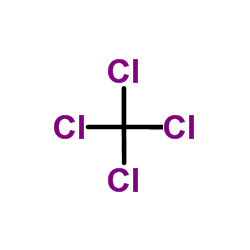
CAS Number56-23-5
Synonymstert-butyl N-acetate; EINECS 203-453-4; tetrachloro-methane; 1,1-Dimethyl acetate; tert-Butyl ethanoate; anhydrous tert-butyl acetate; Carbon tetrachloride; tert-BuOCOCH3; carbone tetrachloride; acetic acid tert-butyl ester; anhydrous tetra-chloro-methane; carbon chloride; Acetic acid,1,1-dimethylethyl ester; t-Butyl acetate; Texaco lead appreciator; 1,1-dimethylethyl acetate; MFCD00006998
Molecular FormulaCCl4
Molecular Weight153.82
Purity98.00%
Density1.7±0.1 g/cm3
Boiling Point76.0±8.0 °C at 760 mmHg
Melting Point-23 °C
AppearanceColorless, odorless, transparent liquid, highly volatile.
Symbol
Signal WordWarning
| Chemical & Physical Properties | |
|---|---|
| CAS Number | 56-23-5 |
| Catalog No. | 2A-9014006 |
| Chinese Name | 四氯化碳 |
| Synonyms | tert-butyl N-acetate; EINECS 203-453-4; tetrachloro-methane; 1,1-Dimethyl acetate; tert-Butyl ethanoate; anhydrous tert-butyl acetate; Carbon tetrachloride; tert-BuOCOCH3; carbone tetrachloride; acetic acid tert-butyl ester; anhydrous tetra-chloro-methane; carbon chloride; Acetic acid,1,1-dimethylethyl ester; t-Butyl acetate; Texaco lead appreciator; 1,1-dimethylethyl acetate; MFCD00006998 |
| Molecular Formula | CCl4 |
| Molecular Weight | 153.82 |
| Purity | 98.00 |
| Density | 1.7±0.1 g/cm3 |
| Boiling Point | 76.0±8.0 °C at 760 mmHg |
| Melting Point | -23 °C |
| Appearance | Colorless, odorless, transparent liquid, highly volatile. |
| Water Solubility | 0.8 g/L (20 ºC) |
| Storage Condition | Storage precautions: Store in a cool, ventilated w |
| Packaging | II |
| Application | Carbon tetrachloride is a colorless, non-flammable liquid. Carbon tetrachloride induces acute liver injury via sympathetic pathways. Carbon tetrachloride causes liver fibrosis and hepatotoxicity. Carb |
| HTC | 2903140090 |
| SMILES | ClC(Cl)(Cl)Cl |
| InChI | InChI=1S/CCl4/c2-1(3,4)5 |
| InChI Key | VZGDMQKNWNREIO-UHFFFAOYSA-N |
| Hazard Symbols | 6.1(a) |
| Bioactivity | Carbon tetrachloride is a colorless nonflammable liquid. Carbon tetrachloride induces acute liver injury through the sympathetic nervous pathway. Carbon tetrachloride induces liver fibrosis and hepatotoxicity. Carbon tetrachloride is orally active[1][2][3]. Related Catalog Signaling Pathways >> Others >> Others Research Areas >> Inflammation/Immunology References [1]. Nakade Y, et al. Involvement of endogenous CRF in carbon tetrachloride-induced acute liver injury in rats. Am J Physiol Regul Integr Comp Physiol. 2002 Jun;282(6):R1782-8. [2]. Ma N, et al. MiR-552-3p Regulates Multiple Fibrotic and Inflammatory genes Concurrently in Hepatic Stellate Cells Improving NASH-associated Phenotypes. Int J Biol Sci. 2023 Jul 3;19(11):3456-3471. [3]. Kondeva-Burdina M, et al. In Vitro/In Vivo Hepatoprotective and Antioxidant Effects of Defatted Extract and a Phenolic Fraction Obtained from Phlomis Tuberosa. Int J Mol Sci. 2023 Jun 25;24(13):10631. Chemical & Physical Properties Density 1.7±0.1 g/cm3 Boiling Point 76.0±8.0 °C at 760 mmHg Melting Point -23 °C Molecular Formula CCl4 Molecular Weight 153.82 Flash Point -0.3±15.8 °C Exact Mass 151.875412 LogP 2.86 Vapour density 5.32 (vs air) Vapour Pressure 112.7±0.1 mmHg at 25°C Index of Refraction 1.487 InChIKey VZGDMQKNWNREIO-UHFFFAOYSA-N SMILES ClC(Cl)(Cl)Cl Storage condition 2-8°C Water Solubility 0.8 g/L (20 ºC) |
| Use of | Carbon tetrachloride is a colorless nonflammable liquid. Carbon tetrachloride induces acute liver injury through the sympathetic nervous pathway. Carbon tetrachloride induces liver fibrosis and hepatotoxicity. Carbon tetrachloride is orally active[1][2][3]. Properties Articles234 Name tetrachloromethane Synonym More Synonyms Carbon tetrachloride Biological Activity Description Carbon tetrachloride is a colorless nonflammable liquid. Carbon tetrachloride induces acute liver injury through the sympathetic nervous pathway. Carbon tetrachloride induces liver fibrosis and hepatotoxicity. Carbon tetrachloride is orally active[1][2][3]. Related Catalog Signaling Pathways >> Others >> Others Research Areas >> Inflammation/Immunology References [1]. Nakade Y, et al. Involvement of endogenous CRF in carbon tetrachloride-induced acute liver injury in rats. Am J Physiol Regul Integr Comp Physiol. 2002 Jun;282(6):R1782-8. [2]. Ma N, et al. MiR-552-3p Regulates Multiple Fibrotic and Inflammatory genes Concurrently in Hepatic Stellate Cells Improving NASH-associated Phenotypes. Int J Biol Sci. 2023 Jul 3;19(11):3456-3471. [3]. Kondeva-Burdina M, et al. In Vitro/In Vivo Hepatoprotective and Antioxidant Effects of Defatted Extract and a Phenolic Fraction Obtained from Phlomis Tuberosa. Int J Mol Sci. 2023 Jun 25;24(13):10631. Chemical & Physical Properties Molecular Formula CCl4 Exact Mass 151.875412 Vapour density 5.32 (vs air) Index of Refraction 1.487 InChIKey VZGDMQKNWNREIO-UHFFFAOYSA-N SMILES ClC(Cl)(Cl)Cl |
| Related Products in Specialty Chemicals | ||
|---|---|---|
| Carbon bisulfide | 75-15-0 | 2A-9014001 |
| Carbon mono xide | 630-08-0 | 2A-9014002 |
| Carbon nanotubes | 1333-86-4 | 2A-9014003 |
| Carbon oxysulfide | 463-58-1 | 2A-9014004 |
| Carbon tetrabromide | 558-13-4 | 2A-0202142 |
| Carbon tetraiodide | 507-25-5 | 2A-9014007 |
| carbon-(13)C dioxide | 1111-72-4 | 2A-9014008 |
| Carboxybenzene | 65-85-0 | 2A-9014009 |
| Catechol | 120-80-9 | 2A-9014010 |
| Cellulose nitrate | 9004-70-0 | 2A-9014012 |
| Browse all Specialty Chemicals products » | ||
Phone:
630-322-8886
630-322-8887
Email:
Office Locations:
Chicago, IL, USA
San Francisco, CA, USA


 EN
EN


 SDS
SDS